
 10-24-2022, 12:30 PM
-
#1

- jtaylor2010
- Join Date: Mar 2010
- Location: United States
- Posts: 33,185
- Rep Power: 441422
-
-

The 4 Archetypes of the Mature Masculine
https://www.artofmanliness.com/chara...-introduction/
Multiple links to referenced material hyperlinked on the page linked above.
The purpose of the Art of Manliness is to help men become better men. To that end, we often explore some of the problems unique to modern men and offer suggestions on actions they can take to overcome those problems. One problem that we discuss regularly on the site is that of the modern male malaise. Maybe you’ve experienced it: You feel restless and without a sense of purpose. You lack confidence in yourself as a man. You might be 20 or 30 or 40 years old, but you don’t feel like you’ve reached manhood.
A few weeks ago, we did a series called The Five Switches of Manliness. In it we made the case that within every man are psychological switches that must be turned on if a man wishes to activate his unique primordial masculine energy. The switches are how you power up the Wild Man within you and overcome the feelings of shiftlessness and male malaise that many men experience these days.
Another way of approaching the cure for the modern male malaise comes from the book King, Warrior, Magician, Lover: Rediscovering the Archetypes of the Mature Masculine, by Jungian psychologist Robert Moore and mythologist Douglas Gillette. Moore argues that masculinity is made up of four archetypal male energies which serve different purposes. All men, whether born in the U.S. or Africa, are born with these archetypal energies. The authors argue that to become a complete man, a man must work to develop all four archetypes. The result of striving to become complete is a feeling of manly confidence and purpose.
King, Warrior, Magician, Lover was originally published in 1990, and it has had a pretty big influence on masculinity in America. It, along with Robert Bly’s book, Iron John: A Book About Men, kick-started the mythopoetic men’s movement of the early 1990s. During this time, many men in America started attending men’s groups and weekend retreats where they would take part in rites of passage and discuss ancient myths to gain personal insights about what it means to be a man. You can still see the influence of King, Warrior, Magician, Lover in books like Wild at Heart or weekend men’s retreats like The ManKind Project.
Some of the ideas in KWML are of the New-Agey, sensitive pony-tail guy, sitting in drum circles in the woods type. Personally, that sort of approach doen’t appeal to me as a man. I know lots of men that get a lot out of that sort of thing. To each their own. Nonetheless, I still feel like I benefited a great deal from reading the book and putting into practice some of Moore and Gillette’s ideas.
Over the next few months, we’re going to be delving into the four masculine archetypes in KWML. We’ll explore what they are and how you can access them on your journey to becoming a better man.
Psychologist Robert Moore took the concept of Jung’s archetypes and used it to create a framework that explained the development of mature and integral masculinity in men. Moore argued that the problems we see with men today–violence, shiftlessness, aloofness–are a result of modern men not adequately exploring or being in touch with the primal, masculine archetypes that reside within them. Like Jung, Moore believed that men and women possess both feminine and masculine archetypal patterns–this is the anima (feminine) and animus (masculine).
The problem with modern men is that Western society suppresses the animus or masculine archetype within them and instead encourages men to get in touch with their “softer side” or their anima. Moore would argue that there’s nothing wrong with men developing those softer, more nurturing and feminine behaviors. In fact, he would encourage it. A problem only arises when the development of the feminine comes at the expense of the masculine.
According to Moore, masculine psychology is made up of four major archetypes: King, Warrior, Magician, and Lover. In order for a man to achieve mature masculine strength and energy, he must be in touch with all four.
The Structure of the Archetypes
Moore argues that each male archetype consists of three parts: the full and highest expression of the archetype and two bi-polar dysfunctional shadows of the archetype. To better understand this, Moore portrays each archetype as a triangle. Here’s an example of the King archetype thusly illustrated:
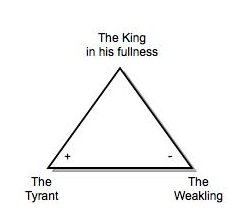
The bottom corners of the triangle represent the bi-polar shadow-split in the archetypal Self. The goal of each man, according to Moore, is to reconcile and integrate these two bi-polar shadows in order to attain the fullest expression of the archetype as represented at the top of the triangle.
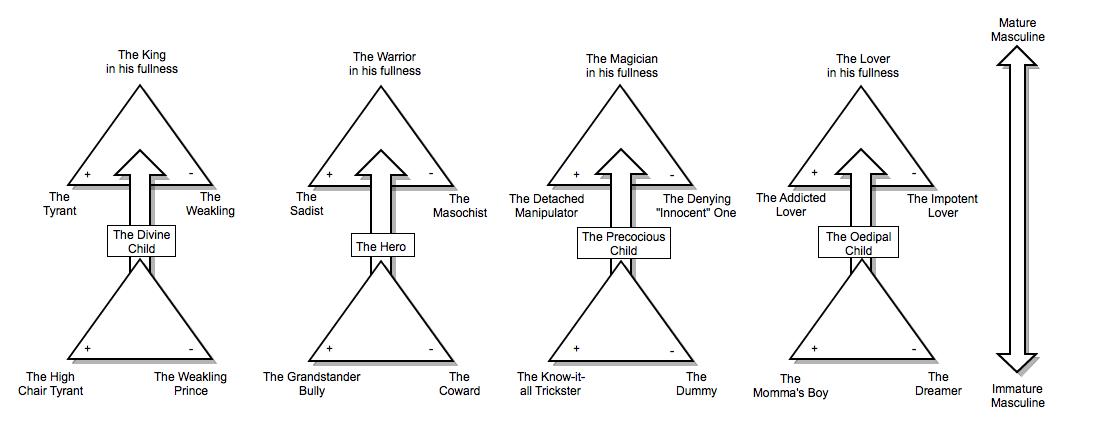
Moreover, each archetype has a mature and immature form. Moore calls the mature forms of the masculine archetypes “Man Psychology” and the immature forms “Boy Psychology.” The mature masculine archetypes are the four we’ve already mentioned: King, Warrior, Magician, Lover. The immature, boyhood archetypes are the Divine Child, the Hero, the Precocious Child, and the Oedipal Child. Each of these immature archetypes have the same tripartite configuration as the mature archetypes. They all have their highest and fullest expression along with their two bi-polar dysfunctional shadows.
Before a boy can access the King archetype he must develop the Divine Child; before he can access the Warrior archetype, he must develop the Hero archetype. And so on and so forth.
Whew. That’s a lot to chew on and digest. It sounds complicated, but I think if you see Moore’s idea of the four masculine archetypes and the development from immature to mature masculinity in a diagram, it’s actually pretty easy to understand (Click the image to zoom in):
Over the next few months, we’ll be taking a look at each of the four archetypes and providing suggestions on how you can develop them more fully in your own life. Here’s a roadmap of what we have coming ahead
Boyhood Archetypes
The King Archetype
The Warrior Archetype
The Magician Archetype
The Lover Archetype
How to Access the Archetypes
Multiple links to referenced material hyperlinked on the page linked above.
The purpose of the Art of Manliness is to help men become better men. To that end, we often explore some of the problems unique to modern men and offer suggestions on actions they can take to overcome those problems. One problem that we discuss regularly on the site is that of the modern male malaise. Maybe you’ve experienced it: You feel restless and without a sense of purpose. You lack confidence in yourself as a man. You might be 20 or 30 or 40 years old, but you don’t feel like you’ve reached manhood.
A few weeks ago, we did a series called The Five Switches of Manliness. In it we made the case that within every man are psychological switches that must be turned on if a man wishes to activate his unique primordial masculine energy. The switches are how you power up the Wild Man within you and overcome the feelings of shiftlessness and male malaise that many men experience these days.
Another way of approaching the cure for the modern male malaise comes from the book King, Warrior, Magician, Lover: Rediscovering the Archetypes of the Mature Masculine, by Jungian psychologist Robert Moore and mythologist Douglas Gillette. Moore argues that masculinity is made up of four archetypal male energies which serve different purposes. All men, whether born in the U.S. or Africa, are born with these archetypal energies. The authors argue that to become a complete man, a man must work to develop all four archetypes. The result of striving to become complete is a feeling of manly confidence and purpose.
King, Warrior, Magician, Lover was originally published in 1990, and it has had a pretty big influence on masculinity in America. It, along with Robert Bly’s book, Iron John: A Book About Men, kick-started the mythopoetic men’s movement of the early 1990s. During this time, many men in America started attending men’s groups and weekend retreats where they would take part in rites of passage and discuss ancient myths to gain personal insights about what it means to be a man. You can still see the influence of King, Warrior, Magician, Lover in books like Wild at Heart or weekend men’s retreats like The ManKind Project.
Some of the ideas in KWML are of the New-Agey, sensitive pony-tail guy, sitting in drum circles in the woods type. Personally, that sort of approach doen’t appeal to me as a man. I know lots of men that get a lot out of that sort of thing. To each their own. Nonetheless, I still feel like I benefited a great deal from reading the book and putting into practice some of Moore and Gillette’s ideas.
Over the next few months, we’re going to be delving into the four masculine archetypes in KWML. We’ll explore what they are and how you can access them on your journey to becoming a better man.
Psychologist Robert Moore took the concept of Jung’s archetypes and used it to create a framework that explained the development of mature and integral masculinity in men. Moore argued that the problems we see with men today–violence, shiftlessness, aloofness–are a result of modern men not adequately exploring or being in touch with the primal, masculine archetypes that reside within them. Like Jung, Moore believed that men and women possess both feminine and masculine archetypal patterns–this is the anima (feminine) and animus (masculine).
The problem with modern men is that Western society suppresses the animus or masculine archetype within them and instead encourages men to get in touch with their “softer side” or their anima. Moore would argue that there’s nothing wrong with men developing those softer, more nurturing and feminine behaviors. In fact, he would encourage it. A problem only arises when the development of the feminine comes at the expense of the masculine.
According to Moore, masculine psychology is made up of four major archetypes: King, Warrior, Magician, and Lover. In order for a man to achieve mature masculine strength and energy, he must be in touch with all four.
The Structure of the Archetypes
Moore argues that each male archetype consists of three parts: the full and highest expression of the archetype and two bi-polar dysfunctional shadows of the archetype. To better understand this, Moore portrays each archetype as a triangle. Here’s an example of the King archetype thusly illustrated:
The bottom corners of the triangle represent the bi-polar shadow-split in the archetypal Self. The goal of each man, according to Moore, is to reconcile and integrate these two bi-polar shadows in order to attain the fullest expression of the archetype as represented at the top of the triangle.
Moreover, each archetype has a mature and immature form. Moore calls the mature forms of the masculine archetypes “Man Psychology” and the immature forms “Boy Psychology.” The mature masculine archetypes are the four we’ve already mentioned: King, Warrior, Magician, Lover. The immature, boyhood archetypes are the Divine Child, the Hero, the Precocious Child, and the Oedipal Child. Each of these immature archetypes have the same tripartite configuration as the mature archetypes. They all have their highest and fullest expression along with their two bi-polar dysfunctional shadows.
Before a boy can access the King archetype he must develop the Divine Child; before he can access the Warrior archetype, he must develop the Hero archetype. And so on and so forth.
Whew. That’s a lot to chew on and digest. It sounds complicated, but I think if you see Moore’s idea of the four masculine archetypes and the development from immature to mature masculinity in a diagram, it’s actually pretty easy to understand (Click the image to zoom in):
Over the next few months, we’ll be taking a look at each of the four archetypes and providing suggestions on how you can develop them more fully in your own life. Here’s a roadmap of what we have coming ahead
Boyhood Archetypes
The King Archetype
The Warrior Archetype
The Magician Archetype
The Lover Archetype
How to Access the Archetypes
10-24-2022, 12:33 PM
-
#2
 10-24-2022, 12:57 PM
-
#3
- jtaylor2010
- Join Date: Mar 2010
- Location: United States
- Posts: 33,185
- Rep Power: 441422
-
-
Originally Posted By Polaris⏩
Too much reality…though I’m not sure I’d call it a masculine archetype5th Archetype -
MISCer
MISCer
10-24-2022, 01:08 PM
-
#4

 10-24-2022, 01:09 PM
-
#5
 10-24-2022, 01:12 PM
-
#6

 10-24-2022, 01:16 PM
-
#7

Originally Posted By jtaylor2010⏩
Nice graphic. Watching a good interview right now which started out talking about generations and political divisions before diving into the sad situation that boys and men have fallen into.https://www.artofmanliness.com/chara...-introduction/
Multiple links to referenced material hyperlinked on the page linked above.
Multiple links to referenced material hyperlinked on the page linked above.
Two things they get into:
- young men satisfying their drive for achievement and sex with video games and porn instead of getting out and engaging in real life
- the importance of mentorship and how much younger men need older men [fraternity] to shape them for successful masculine leadership
Sorry to say that when they described the 50% of men shut out of the mating market it resembled a lot of miscers.

Warning: he is a liberal, doesn't hate men though.
If you want to skip to his advice for men who are struggling it is near the end and it is labeled.
INTP Crew
Inattentive ADD Crew
Mom That Miscs Crew
10-24-2022, 01:20 PM
-
#8
Originally Posted By katya422⏩
Yeah Chris Williamson's channel is pretty good in generalNice graphic. Watching a good interview right now which started out talking about generations and political divisions before diving into the sad situation that boys and men have fallen into.
Two things they get into:
- young men satisfying their drive for achievement and sex with video games and porn instead of getting out and engaging in real life
- the importance of mentorship and how much younger men need older men [fraternity] to shape them for successful masculine leadership
Sorry to say that when they described the 50% of men shut out of the mating market it resembled a lot of miscers.
Warning: he is a liberal, doesn't hate men though.
If you want to skip to his advice for men who are struggling it is near the end and it is labeled.
Two things they get into:
- young men satisfying their drive for achievement and sex with video games and porn instead of getting out and engaging in real life
- the importance of mentorship and how much younger men need older men [fraternity] to shape them for successful masculine leadership
Sorry to say that when they described the 50% of men shut out of the mating market it resembled a lot of miscers.
Warning: he is a liberal, doesn't hate men though.
If you want to skip to his advice for men who are struggling it is near the end and it is labeled.
Person
10-24-2022, 01:32 PM
-
#9
- jtaylor2010
- Join Date: Mar 2010
- Location: United States
- Posts: 33,185
- Rep Power: 441422
-
-
Originally Posted By Supaduck0⏩
Well these archetypes/personality traits emerge in humans over and over and over again. Recognizing patterns amongst the types of people and then understanding the types of roadblocks/pitfalls as well as the advantages most likely to emerge for each aspect seems like a good idea to me. Fully developing aspects of your personality and knowing which environments call for which approaches can be very beneficial.Astrology for men
10-24-2022, 01:34 PM
-
#10
Originally Posted By jtaylor2010⏩
Yeah I agree I was just being dismissive for the sake of it, it's misc after allWell these archetypes/personality traits emerge in humans over and over and over again. Recognizing patterns amongst the types of people and then understanding the types of roadblocks/pitfalls as well as the advantages most likely to emerge for each aspect seems like a good idea to me. Fully developing aspects of your personality and knowing which environments call for which approaches can be very beneficial.
Person
10-24-2022, 06:22 PM
-
#11
- jtaylor2010
- Join Date: Mar 2010
- Location: United States
- Posts: 33,185
- Rep Power: 441422
-
-
Part 2
https://www.artofmanliness.com/chara...etypes-part-i/
To understand the four archetypes of mature masculinity we first need to explore their precursors. There are four boyhood archetypes which develop into the manly archetypes. Properly accessing and harnessing their energies is essential for a boy’s full development. These archetypes instill in boys a sense of wonder, play, and energy traits that are essential for learning and development.
And these boyhood archetypes don’t leave us as we grow up, progress, and access the mature masculine archetypes. While each of the four boyhood archetypes gives rise to the four manly archetypes, they are not discarded once we reach them; the boyhood archetypes remain as building blocks in the structure of our manliness.
While Moore and other Jungians would encourage men to stay in touch with their boyhood archetypes, they’d argue that we shouldn’t do so at the expense of developing the mature masculine within us.According to Moore, one of the biggest problems facing men in the West is that most men are still ruled by boyhood archetypes and haven’t moved on to harnessing the mature masculine. As a result, we have a society of men who act and think like teenagers. They are, as Moore puts it, “boys pretending to be men.”
Exploring the boyhood archetypes is useful for two reasons. First, it’s a reminder thatwe should never lose touch with the energetic boyishness that resides in each of us. Accessing that boyish enthusiasm makes life enjoyable and allows us to relate to our sons or other boys we might be in charge of. Second,exploring the boyhood archetypes, particularly their bipolar shadows, will make us aware of any childish thought patterns we are still falling into, patterns which may be stunting our growth into mature manhood.
Today will we discuss two of the boyhood archetypes. And next time we will explore the other two.
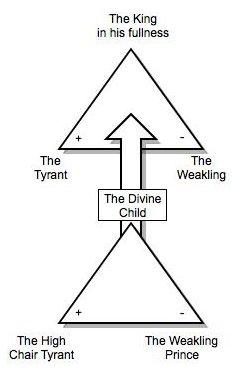
According to Moore, the Divine Child archetype is usually the first of the boyhood archetypes to develop. For Jungians, the Divine Child is the source of boyish enthusiasm for life. It’s the archetype within us that produces a sense of well-being, peace, and joy, as well as a zest for adventure. Whenever you have that feeling of excitement and desire at a fresh beginning, that’s the Divine Child archetype showing itself in your life.
The Divine Child is in many ways both helpless and all-powerful. Helpless because he’s still a child and depends on adults to meet his needs, and all-powerful because he consumes the attention of those around him. The attention that he garners is mutually beneficial: the Divine Child gets his need for attention met, while uplifting and inspiring others. If you’re a parent watching your child accomplish some milestone, you’ll understand this dynamic.
We see the archetype of the Divine Child reflected in various faith traditions and myths from around the world–the most prominent being the Christmas story. Christ is an archetypal Divine Child. His father is God. He comes to the world as a helpless babe, yet people look to him with awe and hope of a new beginning. He brings peace and order to the earth.
Similar stories exist in other cultures. The birth stories of figures like Zoroaster, Moses, Buddha, and Krishna feature miraculous or mystical events that foretold the great work they had to do upon the earth. These special babies had enormous potential, yet they were as vulnerable as any infants are.
If properly nurtured, the Divine Child archetype will mature into the manly King archetype. If neglected, the Divine Child could split off into one of his shadows and eventually mature into a shadow King archetype.
Remember that every archetype has its bi-polar shadow split. These two shadows are the result of the archetype not being integrated into a boy/man in a healthy and coherent way. The two shadows of the Divine Child are the High Chair Tyrant and the Weakling Prince.
The High Chair Tyrant. Like the Divine Child, the High Chair Tyrant needs attention. But unlike the Divine Child, the High Chair Tyrant doesn’t give anything back. He doesn’t inspire–he just demands. And even when his needs are met, the care often doesn’t meet his unreasonable expectations, so he throws a tantrum. With Gus moving to solid foods and eating in a high-chair, this archetype is rather poignant for me. He’s hungry, so we give him food, but sometimes after a few bites he’ll start pushing your hand away and whining. And splattering food all over his dad.
The High Chair Tyrant is the embodiment of entitled, arrogant, narcissism. He wants attention, but he doesn’t want to lift a finger to get it. He thinks he deserves it just because.
We see the influence of the High Chair Tyrant archetype not only in boys, but men who have yet to move on to mature masculinity. As an infant, the world, or at least your parents’ lives, revolve around you and your needs. But as a man matures, he must come to realize that he does not actually reside at the center of the universe! Otherwise, he will not shed his infantile narcissism.
A grown man who is still ruled by the High Chair Tyrant sulks when he doesn’t get his way, fails to take responsibility for his actions, and is incapable of taking criticism. His arrogance can blind him to reality and cause him to stumble. You can see the High Chair Tyrant manifested in celebrities and politicians who believe they are so special that they are not only entitled to indulge in things like infidelity and crookery, but that they won’t get caught either.
We also see the High Chair Tyrant in our lives when we expect nothing but perfection from ourselves and beat ourselves up if we don’t meet those self-imposed and unreasonable expectations. That voice in your head telling you that you aren’t good enough is the little annoying brat of a child inside of you slamming his spoon on the table and screaming. Ignore him.
The Weakling Prince. The Weakling Prince doesn’t throw tantrums like the High Chair Tyrant, but he makes his own kind of demands. He’s got no passion for life, no enthusiasm, and no initiative, and thus must be completely coddled. He plays the victim role superbly; when challenges or problems arise, it’s never the Weakling Prince’s fault, and his parents dutifully swoop in to save him. He’s the hypochondriac kid who always finds something to whine about.
The Weakling Prince archetype can still influence a man into manhood. It usually takes the form of the “Mr. Nice Guy Syndrome.” A man that allows the Weakling Prince archetype to rule in his life is listless and unmotivated. He can’t take the initiative to make his needs known, but gets upset when others don’t meet his expectations. He is the prince of passive aggression.
https://www.artofmanliness.com/chara...etypes-part-i/
To understand the four archetypes of mature masculinity we first need to explore their precursors. There are four boyhood archetypes which develop into the manly archetypes. Properly accessing and harnessing their energies is essential for a boy’s full development. These archetypes instill in boys a sense of wonder, play, and energy traits that are essential for learning and development.
And these boyhood archetypes don’t leave us as we grow up, progress, and access the mature masculine archetypes. While each of the four boyhood archetypes gives rise to the four manly archetypes, they are not discarded once we reach them; the boyhood archetypes remain as building blocks in the structure of our manliness.
While Moore and other Jungians would encourage men to stay in touch with their boyhood archetypes, they’d argue that we shouldn’t do so at the expense of developing the mature masculine within us.According to Moore, one of the biggest problems facing men in the West is that most men are still ruled by boyhood archetypes and haven’t moved on to harnessing the mature masculine. As a result, we have a society of men who act and think like teenagers. They are, as Moore puts it, “boys pretending to be men.”
Exploring the boyhood archetypes is useful for two reasons. First, it’s a reminder thatwe should never lose touch with the energetic boyishness that resides in each of us. Accessing that boyish enthusiasm makes life enjoyable and allows us to relate to our sons or other boys we might be in charge of. Second,exploring the boyhood archetypes, particularly their bipolar shadows, will make us aware of any childish thought patterns we are still falling into, patterns which may be stunting our growth into mature manhood.
Today will we discuss two of the boyhood archetypes. And next time we will explore the other two.
According to Moore, the Divine Child archetype is usually the first of the boyhood archetypes to develop. For Jungians, the Divine Child is the source of boyish enthusiasm for life. It’s the archetype within us that produces a sense of well-being, peace, and joy, as well as a zest for adventure. Whenever you have that feeling of excitement and desire at a fresh beginning, that’s the Divine Child archetype showing itself in your life.
The Divine Child is in many ways both helpless and all-powerful. Helpless because he’s still a child and depends on adults to meet his needs, and all-powerful because he consumes the attention of those around him. The attention that he garners is mutually beneficial: the Divine Child gets his need for attention met, while uplifting and inspiring others. If you’re a parent watching your child accomplish some milestone, you’ll understand this dynamic.
We see the archetype of the Divine Child reflected in various faith traditions and myths from around the world–the most prominent being the Christmas story. Christ is an archetypal Divine Child. His father is God. He comes to the world as a helpless babe, yet people look to him with awe and hope of a new beginning. He brings peace and order to the earth.
Similar stories exist in other cultures. The birth stories of figures like Zoroaster, Moses, Buddha, and Krishna feature miraculous or mystical events that foretold the great work they had to do upon the earth. These special babies had enormous potential, yet they were as vulnerable as any infants are.
If properly nurtured, the Divine Child archetype will mature into the manly King archetype. If neglected, the Divine Child could split off into one of his shadows and eventually mature into a shadow King archetype.
Remember that every archetype has its bi-polar shadow split. These two shadows are the result of the archetype not being integrated into a boy/man in a healthy and coherent way. The two shadows of the Divine Child are the High Chair Tyrant and the Weakling Prince.
The High Chair Tyrant. Like the Divine Child, the High Chair Tyrant needs attention. But unlike the Divine Child, the High Chair Tyrant doesn’t give anything back. He doesn’t inspire–he just demands. And even when his needs are met, the care often doesn’t meet his unreasonable expectations, so he throws a tantrum. With Gus moving to solid foods and eating in a high-chair, this archetype is rather poignant for me. He’s hungry, so we give him food, but sometimes after a few bites he’ll start pushing your hand away and whining. And splattering food all over his dad.
The High Chair Tyrant is the embodiment of entitled, arrogant, narcissism. He wants attention, but he doesn’t want to lift a finger to get it. He thinks he deserves it just because.
We see the influence of the High Chair Tyrant archetype not only in boys, but men who have yet to move on to mature masculinity. As an infant, the world, or at least your parents’ lives, revolve around you and your needs. But as a man matures, he must come to realize that he does not actually reside at the center of the universe! Otherwise, he will not shed his infantile narcissism.
A grown man who is still ruled by the High Chair Tyrant sulks when he doesn’t get his way, fails to take responsibility for his actions, and is incapable of taking criticism. His arrogance can blind him to reality and cause him to stumble. You can see the High Chair Tyrant manifested in celebrities and politicians who believe they are so special that they are not only entitled to indulge in things like infidelity and crookery, but that they won’t get caught either.
We also see the High Chair Tyrant in our lives when we expect nothing but perfection from ourselves and beat ourselves up if we don’t meet those self-imposed and unreasonable expectations. That voice in your head telling you that you aren’t good enough is the little annoying brat of a child inside of you slamming his spoon on the table and screaming. Ignore him.
The Weakling Prince. The Weakling Prince doesn’t throw tantrums like the High Chair Tyrant, but he makes his own kind of demands. He’s got no passion for life, no enthusiasm, and no initiative, and thus must be completely coddled. He plays the victim role superbly; when challenges or problems arise, it’s never the Weakling Prince’s fault, and his parents dutifully swoop in to save him. He’s the hypochondriac kid who always finds something to whine about.
The Weakling Prince archetype can still influence a man into manhood. It usually takes the form of the “Mr. Nice Guy Syndrome.” A man that allows the Weakling Prince archetype to rule in his life is listless and unmotivated. He can’t take the initiative to make his needs known, but gets upset when others don’t meet his expectations. He is the prince of passive aggression.
10-24-2022, 06:25 PM
-
#12
- jtaylor2010
- Join Date: Mar 2010
- Location: United States
- Posts: 33,185
- Rep Power: 441422
-
-
Integrating the Divine Child into your life as a man ensures that even as you get older, you still remain young at heart; this archetype keeps life feeling fresh, inspires you with a vision of your possibilities, fuels your creativity, and spurs you to adventure. A man who does not retain some of the Divine Child in him loses sight of his great potential and contents himself with being merely mediocre. Successful integration of the Divine Child archetype involves retaining a remembrance of your godlike possibilities, while at the same time having the humility to realize you’re only human after all.
10-24-2022, 06:27 PM
-
#13
 10-24-2022, 06:29 PM
-
#14

 10-24-2022, 06:30 PM
-
#15
- jtaylor2010
- Join Date: Mar 2010
- Location: United States
- Posts: 33,185
- Rep Power: 441422
-
-
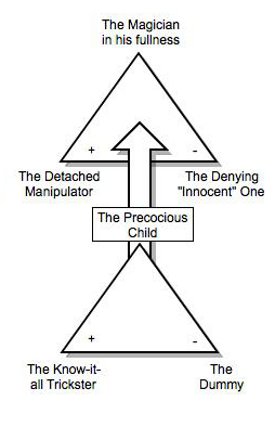
The next boyhood archetype to develop is the Precocious Child. If properly nurtured, the Precocious Child will eventually develop into the mature masculine archetype of the Magician. The Precocious Child archetype shows itself when a boy is eager to learn about the world around him. Curiosity and wonder spring from this archetype. When your kid asks all those annoying “why” questions–Why is the sky blue? Why is the sun bright? Why do things die?–the Precocious Child is manifesting itself. Ditto for boys who read for hours, get really into an art project or science experiment, or work intently on improving their athletic skills.
The Precocious Child pushes us to develop our talents and gives us that manly spark to explore and investigate, to find out how the world works and what makes people tick. He ponders life’s mysteries and is reflective and introspective, although not anti-social, for he loves to share what he’s learned with others in hopes of helping them. A man who stays in touch with this boyhood archetype maintains his boyish wonder and curiosity about the world. He refuses to let cynicism rot his insides and jade him from the marvels of life.
The Shadows of the Precocious Child
The Know-It-All Trickster. As the name implies, this immature masculine energy is the place from which mischief in boys (whether innocent or devious) springs. It originates from a boy’s sense of superiority to everyone else–a superiority he feels compelled to prove and show-off in various ways.
The Know-It-All Trickster knows how to charm his way out of trouble. He’s adept at deception and manipulation and will gain the trust of those around him, only to betray it when they least expect it.
The Know-It-All Trickster is also the source of smart assery from young bucks. Boys (and some men, too) who let the Know-It-All Trickster rule their psyche are prone to running their mouth off. This can be a positive thing–the Trickster will point out mistakes and say that the king isn’t wearing any clothes when others are afraid to. But boys under the power of the Know-It-All shadow can be quite smug and enjoy intimidating others with their words.
The Trickster has lost touch with the Divine Child, and thus does not feel that he himself has any degree of greatness. Because his sense of superiority is often not based on anything substantive, he is envious and insecure, and this is manifested in the need to brag, “one-up,” and tear down other people and their ideas. He loves to destroy things, but he does not build himself.
The Trickster is focused on maintaining appearances. Men who grow into adulthood still under the influence of this immature archetype turn into “$40,000 a year millionaires.” They don’t make much money, but they sure spend and act like they do. Again, it’s all an attempt to trick others into thinking the Know-It-All Trickster is better than he really is, and most importantly, that he’s better than others.
Mythology is filled with Trickster figures. Odysseus from Greek lore was known as a “man of many wiles.” His trickery helped him survive his long trip home, but his loud mouth also got him into troubles that made the journey longer. In Native American cultures, the coyote often takes on the role of the Trickster in their myths.
The Dummy. Boys under the influence of the Dummy shadow are seemingly uncoordinated, naive, lacking in boyish vigor, and slow on the uptake. According to Moore, “the Dummy’s ineptitude…is frequently less than honest.” He may actually understand more than he lets on, but plays dumb to deceive those around him and to avoid the risk of striving and failing. In short, the Dummy shadow has a secret Trickster shadow lurking within him. An archetype within an archetype.
A man who has successfully integrated the Precocious Child archetype maintains his curiosity about the world and is dedicated to lifelong learning. He allows himself to contemplate the mysteries of life and is always seeking greater knowledge. But he does not use the accumulation of this knowledge to feel superior to others nor to manipulate and deceive them. Instead, he is devoted to sharing his insights as a mentor and teacher.
10-24-2022, 06:31 PM
-
#16
- CondorHero1995
- Banned
-

- CondorHero1995
- Banned
- Join Date: Oct 2022
- Age: 56
- Posts: 345
- Rep Power: 0
-
-
The King = CEO 10k/day
The Warrior = Chad
The Magician = Jester
The Lover = Simp
We been knew this.
The Warrior = Chad
The Magician = Jester
The Lover = Simp
We been knew this.
10-24-2022, 06:35 PM
-
#17
Originally Posted By katya422⏩
He gave great adviceNice graphic. Watching a good interview right now which started out talking about generations and political divisions before diving into the sad situation that boys and men have fallen into.
Two things they get into:
- young men satisfying their drive for achievement and sex with video games and porn instead of getting out and engaging in real life
- the importance of mentorship and how much younger men need older men [fraternity] to shape them for successful masculine leadership
Sorry to say that when they described the 50% of men shut out of the mating market it resembled a lot of miscers.
Warning: he is a liberal, doesn't hate men though.
If you want to skip to his advice for men who are struggling it is near the end and it is labeled.
Two things they get into:
- young men satisfying their drive for achievement and sex with video games and porn instead of getting out and engaging in real life
- the importance of mentorship and how much younger men need older men [fraternity] to shape them for successful masculine leadership
Sorry to say that when they described the 50% of men shut out of the mating market it resembled a lot of miscers.
Warning: he is a liberal, doesn't hate men though.
If you want to skip to his advice for men who are struggling it is near the end and it is labeled.
Financial Freedom/Passive Income Crew
Entrepreneur Crew
MMA Crew
Cinematographer Crew
Photographer Crew
Ski/Snowboard Crew
Guns Crew
10-26-2022, 04:40 PM
-
#18
- jtaylor2010
- Join Date: Mar 2010
- Location: United States
- Posts: 33,185
- Rep Power: 441422
-
-
https://www.artofmanliness.com/chara...types-part-ii/
The Oedipal Child
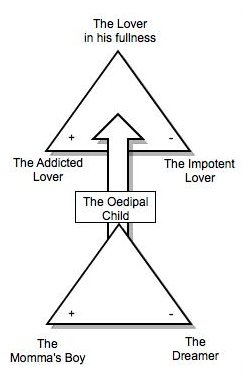
Did you initially recoil a little when you read the name of this archetype? It’s easy to read “Oedipal Child” and think “Oedipus Complex.” You know, Freud’s idea that boys have a repressed sexual desire for their mothers. Yuck, right? Well, hold on a sec.
True, Moore does argue that a boy’s yearning for “the nurturing, infinitely good, infinitely beautiful Mother,” is at the root of this archetype. But this longing is not for a boy’s actual mother, but rather for the feminine energy of the “Great Mother–the Goddess in her many forms in the myths and legends of many peoples and cultures.”
Okay, that probably doesn’t help very much either. This is one of those places where Moore and Gillette get a little too New Agey for me, and where their prose can put distance between their ideas and many modern men.
The way I think of the Oedipal Child archetype is to relate it to the philosophy of the Romantic period, which I really enjoy. Think Ralph Waldo Emerson. The Romantics explored their inner life, celebrating the power of imagination and intuition, seeking to feel and experience life deeply, and extolling the virtues of passion and free expression. They sought to tap into the energy that emanated from Mother Nature. The Oedipal Child archetype also gives a boy the desire to forge relationships with others and the affection and warmth to nurture those relationships. Thus at the heart of this archetypes is the desire for connection–a connection with oneself, with the deeper forces of life, with nature, and with other people. In this way, the Oedipal Child archetype contains the seeds of a man’s spirituality.
See? It’s a good thing! At least when it’s nurtured into the mature Lover archetype by masculine energy. If it’s not–these shadows are the result:
The Shadows of the Oedipal Child
The Mama’s Boy. Instead of tapping into the positive feminine energy associated with “the Great Mother,” the Mama’s Boy fixates on the energy as embodied by his real mother (and other women); he is too connected to his mom. Jung would argue that this shadow archetype takes control when there is no father, or a weak father in the home.
The Mama’s Boy shadow manifests itself in various ways. The most obvious is the boy (or man) who’s “tied to Mama’s apron strings.” He never wants to offend, hurt, or worry his mother. He lives to please dear old mom, even if that means putting her desires and wishes above his own. Nothing gives him more satisfaction than hearing his mom say, “That’s a good boy.”
Many men never break out from under the influence of the Mama’s Boy shadow. They always acquiesce to their mother’s wishes and put what mom wants ahead of what their wives want (and what they themselves want). These men never learn that man was made to leave his mother and father and cleave unto his wife only.
Other ways the Mama’s Boy shadow rears its ugly head in adult men is womanizing and excessive porn use. An overbearing desire for union with one’s mother and a failure to harness feminine energy in a healthy way will result in a man looking to fill that void and find that connection in mere mortal women. But of course mortal women can never fill that role as the Mother archetype. So a man under the power of the Mama’s Boy shadow moves from failed relationship to failed relationship or spends countless hours each week looking at porn in hopes that he’ll find a woman who’ll fulfill his need.
The Dreamer. The passive shadow of the Oedipal Child archetype is the Dreamer. Instead of seeking connection with others (especially with Mother), the Dreamer is aloof. While the positive Oedipal Child archetype fuels a boy’s spirituality, the Dreamer pushes this desire for other-worldliness to an extreme. He cuts himself off from human relationships because he would rather be alone with his thoughts. While there’s certainly nothing wrong with introspection and solitude, the boy under the influence of the Dreamer shadow too often has his head in the clouds and drifts away from reality. He spends too much time dreaming, and not enough time learning how to have relationships with other people, and thus developing the social skills needed to make his dreams comes true. He is stunted and unconnected.
Accessing the Oedipal Child Archetype as a Man
A man who has successfully integrated the Oedipal Child into his psyche understands the gentle part of being a gentleman. He can be warm, even “sweet” with others, and he can be introspective and spiritual while still keeping his feet on the ground. He isn’t afraid to tap into “feminine” energy, but he isn’t dominated by it either. He loves his mother, and has learned much from her, but he is decidedly his own man.
The Oedipal Child
Did you initially recoil a little when you read the name of this archetype? It’s easy to read “Oedipal Child” and think “Oedipus Complex.” You know, Freud’s idea that boys have a repressed sexual desire for their mothers. Yuck, right? Well, hold on a sec.
True, Moore does argue that a boy’s yearning for “the nurturing, infinitely good, infinitely beautiful Mother,” is at the root of this archetype. But this longing is not for a boy’s actual mother, but rather for the feminine energy of the “Great Mother–the Goddess in her many forms in the myths and legends of many peoples and cultures.”
Okay, that probably doesn’t help very much either. This is one of those places where Moore and Gillette get a little too New Agey for me, and where their prose can put distance between their ideas and many modern men.
The way I think of the Oedipal Child archetype is to relate it to the philosophy of the Romantic period, which I really enjoy. Think Ralph Waldo Emerson. The Romantics explored their inner life, celebrating the power of imagination and intuition, seeking to feel and experience life deeply, and extolling the virtues of passion and free expression. They sought to tap into the energy that emanated from Mother Nature. The Oedipal Child archetype also gives a boy the desire to forge relationships with others and the affection and warmth to nurture those relationships. Thus at the heart of this archetypes is the desire for connection–a connection with oneself, with the deeper forces of life, with nature, and with other people. In this way, the Oedipal Child archetype contains the seeds of a man’s spirituality.
See? It’s a good thing! At least when it’s nurtured into the mature Lover archetype by masculine energy. If it’s not–these shadows are the result:
The Shadows of the Oedipal Child
The Mama’s Boy. Instead of tapping into the positive feminine energy associated with “the Great Mother,” the Mama’s Boy fixates on the energy as embodied by his real mother (and other women); he is too connected to his mom. Jung would argue that this shadow archetype takes control when there is no father, or a weak father in the home.
The Mama’s Boy shadow manifests itself in various ways. The most obvious is the boy (or man) who’s “tied to Mama’s apron strings.” He never wants to offend, hurt, or worry his mother. He lives to please dear old mom, even if that means putting her desires and wishes above his own. Nothing gives him more satisfaction than hearing his mom say, “That’s a good boy.”
Many men never break out from under the influence of the Mama’s Boy shadow. They always acquiesce to their mother’s wishes and put what mom wants ahead of what their wives want (and what they themselves want). These men never learn that man was made to leave his mother and father and cleave unto his wife only.
Other ways the Mama’s Boy shadow rears its ugly head in adult men is womanizing and excessive porn use. An overbearing desire for union with one’s mother and a failure to harness feminine energy in a healthy way will result in a man looking to fill that void and find that connection in mere mortal women. But of course mortal women can never fill that role as the Mother archetype. So a man under the power of the Mama’s Boy shadow moves from failed relationship to failed relationship or spends countless hours each week looking at porn in hopes that he’ll find a woman who’ll fulfill his need.
The Dreamer. The passive shadow of the Oedipal Child archetype is the Dreamer. Instead of seeking connection with others (especially with Mother), the Dreamer is aloof. While the positive Oedipal Child archetype fuels a boy’s spirituality, the Dreamer pushes this desire for other-worldliness to an extreme. He cuts himself off from human relationships because he would rather be alone with his thoughts. While there’s certainly nothing wrong with introspection and solitude, the boy under the influence of the Dreamer shadow too often has his head in the clouds and drifts away from reality. He spends too much time dreaming, and not enough time learning how to have relationships with other people, and thus developing the social skills needed to make his dreams comes true. He is stunted and unconnected.
Accessing the Oedipal Child Archetype as a Man
A man who has successfully integrated the Oedipal Child into his psyche understands the gentle part of being a gentleman. He can be warm, even “sweet” with others, and he can be introspective and spiritual while still keeping his feet on the ground. He isn’t afraid to tap into “feminine” energy, but he isn’t dominated by it either. He loves his mother, and has learned much from her, but he is decidedly his own man.
10-26-2022, 04:48 PM
-
#19
- jtaylor2010
- Join Date: Mar 2010
- Location: United States
- Posts: 33,185
- Rep Power: 441422
-
-
The Hero
Think back to when you were a teenager. Remember that feeling of expanding independence? Little by little you started to rely less and less on your parents for your basic needs. You clamored for more freedoms and for your parents to get off your back.
Also, if you were like most teenage boys, you probably took part in activities (sometimes very risky activities) to test your mettle and your ability to overcome fear. You wanted to prove to your friends, and more importantly to yourself, that you were “man enough” to take on any challenge that came your way.
When I was in Vermont a few years ago, Kate and I went to this swimming hole in the woods. The water was cold and deep and was surrounded by sheer cliffs. It was perfect for cliff diving, but still pretty treacherous. While Kate and I swam, we watched a group of teenage boys dive from the highest point of the cliff into the water below. Every dive became more elaborate and dangerous.
Kate elbowed me and asked “So, are you going to jump?”
“Nope.”
I was suddenly struck with the feeling of being old. I thought back to the time when I was a teenager camping in New Mexico with some friends. We found a lake with 40 foot sheer cliffs and spent the afternoon jumping, flipping, and diving into the deep water below. We pushed ourselves to do ever more daring jumps. We wanted to test ourselves. Now here I was 13 years later and I was content just swimming along the edge, watching these young men hurtle themselves into the air and plummet into the water.
That desire for independence we all had as young men and that almost reckless abandon those boys in Vermont had are manifestations of the Hero archetype.
The Hero archetype is unarguably the most common figure found in myths. Joseph Campbell detailed the use of the Hero archetype in his seminal work, The Hero With a Thousand Faces. In that book, Campbell describes an archetypal journey that all mythological heroes must take. Star Wars is a perfect example of the Hero’s Journey. Luke Skywalker begins the story as a mere “farm boy” on the planet Tatooine. By the end of the first trilogy he has morphed into a Hero who saves the galaxy from evil.
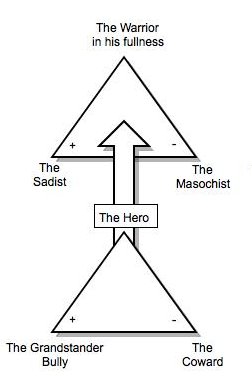
While we’re accustomed to thinking of becoming a hero as the end-all of existence, Moore argues that the hero archetype is still an immature energy that must be further developed into the mature Warrior archetype. Unlike the mature Warrior who fights and battles for a cause bigger than himself, the immature Hero fights and battles mainly for himself. The Hero definitely has ideals–but these ideals are used for a self-serving purpose–to create an identity that facilitates the process of becoming his own man. When you were a teenager, you probably latched onto an identity like this–you were the super-liberal guy, or the super-Christian guy, or the non-comformist Goth guy, and so on. The Hero’s only goal is to win his personal independence, break free from the feminine influence of his mother, and enter fully into manhood. Moreover, while the mature Warrior knows his limitations, the Hero doesn’t have that sort of self-awareness which often results in physical or emotional ruin.
The Hero is usually the last of the boyhood archetypes to develop and is the peak of psychological development in boys. It is the last developmental stage before a boy transitions into manhood. According to Moore, this transformation from boy to man can only occur through the “death” of the Hero. Through initiation and rites of passage, the boy is symbolically killed only to be reborn as a man. Unfortunately, because many men in the modern West lack a rite of passage into manhood, they remain psychologically stuck in adolescence.
The Shadows of the Hero Archetype
The Grandstander Bully. The young man under the influence of the Grandstander Bully demands respect from others and will unleash his wrath both physically and verbally if he doesn’t get it. He has let the Hero’s sense of invulnerability mushroom into an arrogant and inflated sense of self. Thus the boy under the Bully shadow takes unnecessary and foolish risks, and his hubris oftentimes leads to his own destruction.
This shadow very often follows a boy into manhood. Do you know a grown man who suffers from intense road rage or blows up at the waitress who gets his order wrong? That’s the boyhood bully shadow at work. The man who is still haunted by this shadow believes he is superior to all others, and when his inflated sense of self is threatened–ie., when the world does not cater to his needs–he loses his temper and lashes out.
But underneath the Grandstander Bully’s posturing and false bravado lies an insecure coward, and he must fight to keep this fact hidden from everyone else. This insecurity makes the Grandstander Bully sensitive to any insinuation that he isn’t man enough, and so he lacks the confidence to incorporate any “feminine” energy into his life. This is the man who who scoffs at meditation or introspection as “sissy” stuff.
The Coward. The passive polar shadow of the Hero archetype is the Coward. Lacking the Hero’s courage, the boy under this shadow avoids confrontation; whether the conflict is physical or mental or moral, the Coward cannot stand up for himself. He is a conformist–a boy who always goes along with the crowd and does what others tell him to do. Even when fighting back is the right decision, he will walk away and rationalize his choice as the “manlier” thing to do.
But the boy possessed by the Coward cannot even convince himself of his own excuses, and he despises himself for his cowardice. He knows he is a doormat, and as people continue to walk over him, he gets angrier and angrier until he reaches a breaking point and lashes out in full Grandstander Bully fashion. It would have been far better for this boy to handle conflict in a healthier way.
Accessing the Hero Archetype as a Man
I believe the hero archetype is the most difficult for a man to successfully integrate.
On the one hand, teenagers see things as black and white, and despise the wishy-washy convictions and play-it-safe attitude of adults. Teenage Brett would have been disappointed with adult Brett’s decision not to jump off the cliff.
On the other hand, adults shake their heads at the foolish risks young men take and laugh at the unrealistic idealism of young people, telling them they’ll change their mind once they see how the world “really is.”
The complete man must walk the line between these two camps. He must come to understand his own limitations and the true nature of the obstacles in his way; otherwise, he cannot be effective in bringing about real change. At the same time, he cannot lose heart while pushing up against those challenges, and stumble into the kind of cynical apathy that makes seeking greatness seem an impossible task and an entirely worthless endeavor. He needs to be able to sometimes take youthful risks in order to achieve his goals. If a man can pilot his ship through this Charybdis and Scylla, he can become the heroic warrior.
Think back to when you were a teenager. Remember that feeling of expanding independence? Little by little you started to rely less and less on your parents for your basic needs. You clamored for more freedoms and for your parents to get off your back.
Also, if you were like most teenage boys, you probably took part in activities (sometimes very risky activities) to test your mettle and your ability to overcome fear. You wanted to prove to your friends, and more importantly to yourself, that you were “man enough” to take on any challenge that came your way.
When I was in Vermont a few years ago, Kate and I went to this swimming hole in the woods. The water was cold and deep and was surrounded by sheer cliffs. It was perfect for cliff diving, but still pretty treacherous. While Kate and I swam, we watched a group of teenage boys dive from the highest point of the cliff into the water below. Every dive became more elaborate and dangerous.
Kate elbowed me and asked “So, are you going to jump?”
“Nope.”
I was suddenly struck with the feeling of being old. I thought back to the time when I was a teenager camping in New Mexico with some friends. We found a lake with 40 foot sheer cliffs and spent the afternoon jumping, flipping, and diving into the deep water below. We pushed ourselves to do ever more daring jumps. We wanted to test ourselves. Now here I was 13 years later and I was content just swimming along the edge, watching these young men hurtle themselves into the air and plummet into the water.
That desire for independence we all had as young men and that almost reckless abandon those boys in Vermont had are manifestations of the Hero archetype.
The Hero archetype is unarguably the most common figure found in myths. Joseph Campbell detailed the use of the Hero archetype in his seminal work, The Hero With a Thousand Faces. In that book, Campbell describes an archetypal journey that all mythological heroes must take. Star Wars is a perfect example of the Hero’s Journey. Luke Skywalker begins the story as a mere “farm boy” on the planet Tatooine. By the end of the first trilogy he has morphed into a Hero who saves the galaxy from evil.
While we’re accustomed to thinking of becoming a hero as the end-all of existence, Moore argues that the hero archetype is still an immature energy that must be further developed into the mature Warrior archetype. Unlike the mature Warrior who fights and battles for a cause bigger than himself, the immature Hero fights and battles mainly for himself. The Hero definitely has ideals–but these ideals are used for a self-serving purpose–to create an identity that facilitates the process of becoming his own man. When you were a teenager, you probably latched onto an identity like this–you were the super-liberal guy, or the super-Christian guy, or the non-comformist Goth guy, and so on. The Hero’s only goal is to win his personal independence, break free from the feminine influence of his mother, and enter fully into manhood. Moreover, while the mature Warrior knows his limitations, the Hero doesn’t have that sort of self-awareness which often results in physical or emotional ruin.
The Hero is usually the last of the boyhood archetypes to develop and is the peak of psychological development in boys. It is the last developmental stage before a boy transitions into manhood. According to Moore, this transformation from boy to man can only occur through the “death” of the Hero. Through initiation and rites of passage, the boy is symbolically killed only to be reborn as a man. Unfortunately, because many men in the modern West lack a rite of passage into manhood, they remain psychologically stuck in adolescence.
The Shadows of the Hero Archetype
The Grandstander Bully. The young man under the influence of the Grandstander Bully demands respect from others and will unleash his wrath both physically and verbally if he doesn’t get it. He has let the Hero’s sense of invulnerability mushroom into an arrogant and inflated sense of self. Thus the boy under the Bully shadow takes unnecessary and foolish risks, and his hubris oftentimes leads to his own destruction.
This shadow very often follows a boy into manhood. Do you know a grown man who suffers from intense road rage or blows up at the waitress who gets his order wrong? That’s the boyhood bully shadow at work. The man who is still haunted by this shadow believes he is superior to all others, and when his inflated sense of self is threatened–ie., when the world does not cater to his needs–he loses his temper and lashes out.
But underneath the Grandstander Bully’s posturing and false bravado lies an insecure coward, and he must fight to keep this fact hidden from everyone else. This insecurity makes the Grandstander Bully sensitive to any insinuation that he isn’t man enough, and so he lacks the confidence to incorporate any “feminine” energy into his life. This is the man who who scoffs at meditation or introspection as “sissy” stuff.
The Coward. The passive polar shadow of the Hero archetype is the Coward. Lacking the Hero’s courage, the boy under this shadow avoids confrontation; whether the conflict is physical or mental or moral, the Coward cannot stand up for himself. He is a conformist–a boy who always goes along with the crowd and does what others tell him to do. Even when fighting back is the right decision, he will walk away and rationalize his choice as the “manlier” thing to do.
But the boy possessed by the Coward cannot even convince himself of his own excuses, and he despises himself for his cowardice. He knows he is a doormat, and as people continue to walk over him, he gets angrier and angrier until he reaches a breaking point and lashes out in full Grandstander Bully fashion. It would have been far better for this boy to handle conflict in a healthier way.
Accessing the Hero Archetype as a Man
I believe the hero archetype is the most difficult for a man to successfully integrate.
On the one hand, teenagers see things as black and white, and despise the wishy-washy convictions and play-it-safe attitude of adults. Teenage Brett would have been disappointed with adult Brett’s decision not to jump off the cliff.
On the other hand, adults shake their heads at the foolish risks young men take and laugh at the unrealistic idealism of young people, telling them they’ll change their mind once they see how the world “really is.”
The complete man must walk the line between these two camps. He must come to understand his own limitations and the true nature of the obstacles in his way; otherwise, he cannot be effective in bringing about real change. At the same time, he cannot lose heart while pushing up against those challenges, and stumble into the kind of cynical apathy that makes seeking greatness seem an impossible task and an entirely worthless endeavor. He needs to be able to sometimes take youthful risks in order to achieve his goals. If a man can pilot his ship through this Charybdis and Scylla, he can become the heroic warrior.
10-27-2022, 06:26 AM
-
#20
 10-27-2022, 10:26 AM
-
#21
- jtaylor2010
- Join Date: Mar 2010
- Location: United States
- Posts: 33,185
- Rep Power: 441422
-
-
Originally Posted By ukr1410⏩
Seems pretty straightforward to me….Way too complicated!
10-27-2022, 10:39 AM
-
#22
Originally Posted By ukr1410⏩
Really? I didn't think so, but I'm probably not the best judge.Way too complicated!

OP would it be fair to classify these shadows and archetypes as schema? And is the overarching theme that one should attempt to reach the mature form of all 4, or that someone will identify with one archetype over the other three?
Not a man [swear], but it seems pretty simple to look at the map and identify where you have most trended towards in the past and which ones you have made the most progress on.
INTP Crew
Inattentive ADD Crew
Mom That Miscs Crew
10-27-2022, 10:56 AM
-
#23
- jtaylor2010
- Join Date: Mar 2010
- Location: United States
- Posts: 33,185
- Rep Power: 441422
-
-
Originally Posted By katya422⏩
Yes, ideally a man would want to master all four aspects. And to take it even further, they’d want to have the wisdom to know when each aspect is needed for a particular situation or environment over others. It’s about becoming a well-rounded individual. But the other point you bring up is also true, in that people will naturally lean towards one over the other. And lots don’t have the wisdom to know when to use which approach. For example they may be more comfortable with a certain aspect of themselves and end up reverting to it even in circumstances where other approaches would serve them better.Really? I didn't think so, but I'm probably not the best judge.
OP would it be fair to classify these shadows and archetypes as schema? And is the overarching theme that one should attempt to reach the mature form of all 4, or that someone will identify with one archetype over the other three?
Not a man [swear], but it seems pretty simple to look at the map and identify where you have most trended towards in the past and which ones you have made the most progress on.
OP would it be fair to classify these shadows and archetypes as schema? And is the overarching theme that one should attempt to reach the mature form of all 4, or that someone will identify with one archetype over the other three?
Not a man [swear], but it seems pretty simple to look at the map and identify where you have most trended towards in the past and which ones you have made the most progress on.
And you’re right that it can serve as a roadmap or outline for people to use to track where they are and how they’ve evolved over time. It’s always good to check in from time to time and do an honest self-assessment, so this is just one guideline that can help with that. Because to an large extent these archetypes are the basis for pretty much all men.
10-28-2022, 08:08 AM
-
#24
- jtaylor2010
- Join Date: Mar 2010
- Location: United States
- Posts: 33,185
- Rep Power: 441422
-
-
https://www.artofmanliness.com/chara...ine-the-lover/
Today we take a look at the first archetype of the mature masculine: the Lover.
I originally planned on following how the book orders the archetypes by starting off with the King and finishing with the Lover. But Will, a longtime AoM Community member, suggested that I swap their places. Why? Because according to Moore and other Jungians, each archetype powers up at certain phases in a man’s life. The Lover (as we’ll soon see) is the archetype of youthful idealism and excitement and is usually the first of the archetypes to develop in a man. The King archetype usually power ups last and is a culmination of the other archetypes.
I thought this was a good approach, so that’s what I’ll be doing. Thanks Will!
With that said, let’s get started analyzing the Lover archetype.
The Lover in His Fullness
When you hear the word “lover” you probably think of romance and sex.
But there are many types of love–a love for family, for friends, for God, and for life itself–and the Lover archetype passionately seeks after them all.
The Lover is the archetype of emotion, feeling, idealism, and sensuality. Like the word “lover,” sensuality is often exclusively associated with sex but really has a far broader application. Being sensual means opening up and using all of your senses in all areas of your life–touching, tasting, smelling, hearing, and seeing–or in other words–experiencing as many dimensions of life as possible, as often as possible.
Thus, when a man taps into the Lover archetype’s energy, he feels alive with vim and vigor and connected to the world and those around him. A man in touch with the Lover archetype feels deeply, whether those feelings are of joy or pain.
The Lover is attuned to the mysterious forces underlying our everyday existence; this is the archetype that fuels a man’s spirituality, and the one in which the Muses reside. When we get those flashes of inspiration or sparks of creativity, that’s Lover energy manifesting itself in our lives. A man who takes time to develop this archetype will experience those hunches, insights, and premonitions more frequently than men who don’t.
A man who has fully developed the Lover archetype in his life is also often adept at reading people and social cues. He’s empathetic with others and understands how to get along and connect with a wide variety of people.
Because the Lover is so alive and sensual, he enjoys all of life’s pleasures, whether it be good food and drink, beautiful art, or gorgeous women. This is the archetype that spurs our appetites. But these hungers aren’t just for “baser” pleasures like sex and food, but for a life of meaning and purpose. And in seeking the freedom to passionately pursue these ends, the Lover can see limits and rules as constraining.
This is why the Lover archetype has a unique relationship to the other three archetypes of mature masculinity. While the Lover’s energy seeks to be boundless, the King, Warrior, and Magician archetypes provide a man with structure and discipline. Thus the Lover’s passion fuels and powers these three life forces, and in turn, they channel and harness the Lover’s energy in a healthy way and towards worthy goals.
You can find the Lover archetype in myths and rituals that span culture and time. The Greek god Dionysus presents perhaps the most salient example. Dionysus was the god of wine, merriment, art, passion, and sex. His followers believed that when a man became so overcome with emotion that he appeared mad, Dionysus was to blame. The yearly festival held in his honor each spring was a ritual inspired by the Lover archetype: lots of drinking, lots of dancing, lots of theater, and lots of sex.
A modern story that exemplifies the Lover archetype is Zorba the Greek. Zorba is a man who lives life fully. He’s earthy. He loves good food and drink. He dances his heart out. Zorba understands that for a man to be truly free, he needs to have a deep emotional life; he needs a little madness.
That’s a man who has a healthy dose of the Lover archetype in his life.
The Lover archetype is usually the first that develops in a man. Look at most young men and you see that they’re often ruled by the passionate Lover archetype. They’re looking for new and exciting endeavors, they develop intense romantic and sexual relationships, and they’re filled with youthful idealism. Their experiences are marked by an acute intensity.
Today we take a look at the first archetype of the mature masculine: the Lover.
I originally planned on following how the book orders the archetypes by starting off with the King and finishing with the Lover. But Will, a longtime AoM Community member, suggested that I swap their places. Why? Because according to Moore and other Jungians, each archetype powers up at certain phases in a man’s life. The Lover (as we’ll soon see) is the archetype of youthful idealism and excitement and is usually the first of the archetypes to develop in a man. The King archetype usually power ups last and is a culmination of the other archetypes.
I thought this was a good approach, so that’s what I’ll be doing. Thanks Will!
With that said, let’s get started analyzing the Lover archetype.
The Lover in His Fullness
When you hear the word “lover” you probably think of romance and sex.
But there are many types of love–a love for family, for friends, for God, and for life itself–and the Lover archetype passionately seeks after them all.
The Lover is the archetype of emotion, feeling, idealism, and sensuality. Like the word “lover,” sensuality is often exclusively associated with sex but really has a far broader application. Being sensual means opening up and using all of your senses in all areas of your life–touching, tasting, smelling, hearing, and seeing–or in other words–experiencing as many dimensions of life as possible, as often as possible.
Thus, when a man taps into the Lover archetype’s energy, he feels alive with vim and vigor and connected to the world and those around him. A man in touch with the Lover archetype feels deeply, whether those feelings are of joy or pain.
The Lover is attuned to the mysterious forces underlying our everyday existence; this is the archetype that fuels a man’s spirituality, and the one in which the Muses reside. When we get those flashes of inspiration or sparks of creativity, that’s Lover energy manifesting itself in our lives. A man who takes time to develop this archetype will experience those hunches, insights, and premonitions more frequently than men who don’t.
A man who has fully developed the Lover archetype in his life is also often adept at reading people and social cues. He’s empathetic with others and understands how to get along and connect with a wide variety of people.
Because the Lover is so alive and sensual, he enjoys all of life’s pleasures, whether it be good food and drink, beautiful art, or gorgeous women. This is the archetype that spurs our appetites. But these hungers aren’t just for “baser” pleasures like sex and food, but for a life of meaning and purpose. And in seeking the freedom to passionately pursue these ends, the Lover can see limits and rules as constraining.
This is why the Lover archetype has a unique relationship to the other three archetypes of mature masculinity. While the Lover’s energy seeks to be boundless, the King, Warrior, and Magician archetypes provide a man with structure and discipline. Thus the Lover’s passion fuels and powers these three life forces, and in turn, they channel and harness the Lover’s energy in a healthy way and towards worthy goals.
You can find the Lover archetype in myths and rituals that span culture and time. The Greek god Dionysus presents perhaps the most salient example. Dionysus was the god of wine, merriment, art, passion, and sex. His followers believed that when a man became so overcome with emotion that he appeared mad, Dionysus was to blame. The yearly festival held in his honor each spring was a ritual inspired by the Lover archetype: lots of drinking, lots of dancing, lots of theater, and lots of sex.
A modern story that exemplifies the Lover archetype is Zorba the Greek. Zorba is a man who lives life fully. He’s earthy. He loves good food and drink. He dances his heart out. Zorba understands that for a man to be truly free, he needs to have a deep emotional life; he needs a little madness.
That’s a man who has a healthy dose of the Lover archetype in his life.
The Lover archetype is usually the first that develops in a man. Look at most young men and you see that they’re often ruled by the passionate Lover archetype. They’re looking for new and exciting endeavors, they develop intense romantic and sexual relationships, and they’re filled with youthful idealism. Their experiences are marked by an acute intensity.
10-28-2022, 08:13 AM
-
#25
- jtaylor2010
- Join Date: Mar 2010
- Location: United States
- Posts: 33,185
- Rep Power: 441422
-
-
The Shadows
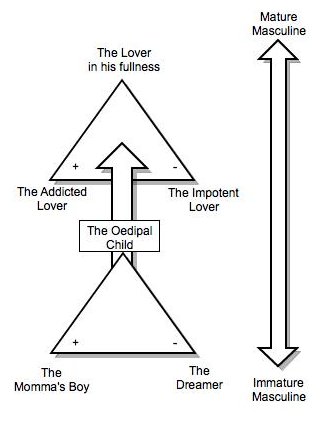
Remember that each archetype has both a pinnacle, which represents the fullness of the archetype, and a bi-polar shadow split. These shadows are the result of the archetype not being integrated into a man in a healthy and coherent way. The two shadows of the Lover archetype are the Addicted Lover and the Impotent Lover.
The Addicted Lover
If the other archetypes do not harness the Lover’s energy, the Addicted Lover shadow can result.
A man possessed by the Addicted Lover is, as Moore puts it, “eternally restless.” He’s forever searching for that one thing, person, or experience that will make him feel truly alive. But whether it’s because he has overinflated expectations, or because he doesn’t even know what he’s searching for in the first place, the vague hunger that endlessly hounds him is never satisfied.
The Addicted Lover falls in love with every girl he dates, and then wallows in despair when she dumps him. He’s constantly getting ideas for inventions or businesses that will make him rich, but he never works at them long enough to get them off the ground. His apartment is cluttered with junk he bought on a whim and never used. His passport is filled with stamps, but he doesn’t feel any happier than we he left home to travel the world.
The Addicted Lover is a collector–of experiences, possessions, or women. But without any structure, any overarching life philosophy to connect the things he collects, his life feels fragmentary instead of whole. Without a channel through which to run, the Lover’s energy dissipates into a million directions.
The flip side of this shadow is the man who takes all of the Lover’s energy and focuses it on one thing. He can become so obsessed with the objects of his desire that instead of bringing joy, they bring destruction and ruin. Perhaps you know a man who became so involved in a vice, a project, or even a hobby that it ruined him financially and destroyed his relationships. That was a man possessed by the Addicted Lover.
I think Jay Gatsby from The Great Gatsby (my favorite book, by the way), is a perfect example of a man possessed by the Addicted Lover. He longs for the wealthy Daisy Buchanan for his entire life. He’s addicted to the idea of being with Daisy and spends his life amassing a fortune through criminal activity just so he can be with her. But in the end, Daisy disappoints Gatsby. The real Daisy didn’t match the fantasy of her that Gatsby had obsessed about for years. If you read the book, you know what happens to ol’ Jay Gatsby in the end. Lesson learned: being possessed by the Addicted Lover leads to ruin.
The Impotent Lover
The Impotent Lover shadow arises when a man is out of touch with the Lover archetype in its fullness. While the Lover in his fullness sees the world in vivid colors and textures, the Impotent Lover only sees gray. Men dogged by the Impotent Lover archetype feel depressed, flat, and dead inside. Nothing brings them joy anymore. They’ve lost their passion for life. Relationships, whether romantic or platonic, struggle and falter for the man possessed by the Impotent Lover. Libido is non-existent in these men, as is their sex life.
While the Addicted Lover does not give himself enough structure, the Impotent Lover can arise in a man who disciplines himself too much. This is often the case with devoutly religious men, who, going far beyond the admonishments of their faith, laden themselves with overly prudish rules, and feel shame when “indulging” in life’s pleasures. The energy of the Lover archetype builds up behind this dam of limits, and without a healthy channel to pursue, sooner or later it bursts forth in destructive ways, like addiction to porn. The Impotent Lover becomes the Addicted Lover.
Accessing the Lover Archetype
According to Moore, the Lover is the most repressed and stunted archetype in men today. Men in the West aren’t encouraged to be “in touch with their feelings.” As men, we’re supposed to be coolly detached from anything and anybody. But the great men in history understood that emotion, properly harnessed, is what drives greatness. The ancient Greeks called this passion for life thumos. It’s a fire in the belly that propels a man to do great deeds.
So accessing the Lover archetype is vital to our success as men. But how do we do it?
The easiest way to tap into the Lover archetype is to take more time to really enjoy the stuff that brings you pleasure in life. The Addicted Lover is forever looking for the high that will last indefinitely. When he takes the first “hit” of something–whether a new drug, a new place, a new lover, or a new car–his brain lights up with pleasure. But our brains quickly get used to the same stimuli, and each additional hit brings diminishing returns. So the Addicted Lover will then take a bigger hit of the stimulus in order to feel the same pleasure he got the first time he tried it. But he’ll quickly get used to that “dose” too. And soon the Addicted Lover is stuck in a destructive cycle–restlessness and dissatisfaction plague him.
Remember that each archetype has both a pinnacle, which represents the fullness of the archetype, and a bi-polar shadow split. These shadows are the result of the archetype not being integrated into a man in a healthy and coherent way. The two shadows of the Lover archetype are the Addicted Lover and the Impotent Lover.
The Addicted Lover
If the other archetypes do not harness the Lover’s energy, the Addicted Lover shadow can result.
A man possessed by the Addicted Lover is, as Moore puts it, “eternally restless.” He’s forever searching for that one thing, person, or experience that will make him feel truly alive. But whether it’s because he has overinflated expectations, or because he doesn’t even know what he’s searching for in the first place, the vague hunger that endlessly hounds him is never satisfied.
The Addicted Lover falls in love with every girl he dates, and then wallows in despair when she dumps him. He’s constantly getting ideas for inventions or businesses that will make him rich, but he never works at them long enough to get them off the ground. His apartment is cluttered with junk he bought on a whim and never used. His passport is filled with stamps, but he doesn’t feel any happier than we he left home to travel the world.
The Addicted Lover is a collector–of experiences, possessions, or women. But without any structure, any overarching life philosophy to connect the things he collects, his life feels fragmentary instead of whole. Without a channel through which to run, the Lover’s energy dissipates into a million directions.
The flip side of this shadow is the man who takes all of the Lover’s energy and focuses it on one thing. He can become so obsessed with the objects of his desire that instead of bringing joy, they bring destruction and ruin. Perhaps you know a man who became so involved in a vice, a project, or even a hobby that it ruined him financially and destroyed his relationships. That was a man possessed by the Addicted Lover.
I think Jay Gatsby from The Great Gatsby (my favorite book, by the way), is a perfect example of a man possessed by the Addicted Lover. He longs for the wealthy Daisy Buchanan for his entire life. He’s addicted to the idea of being with Daisy and spends his life amassing a fortune through criminal activity just so he can be with her. But in the end, Daisy disappoints Gatsby. The real Daisy didn’t match the fantasy of her that Gatsby had obsessed about for years. If you read the book, you know what happens to ol’ Jay Gatsby in the end. Lesson learned: being possessed by the Addicted Lover leads to ruin.
The Impotent Lover
The Impotent Lover shadow arises when a man is out of touch with the Lover archetype in its fullness. While the Lover in his fullness sees the world in vivid colors and textures, the Impotent Lover only sees gray. Men dogged by the Impotent Lover archetype feel depressed, flat, and dead inside. Nothing brings them joy anymore. They’ve lost their passion for life. Relationships, whether romantic or platonic, struggle and falter for the man possessed by the Impotent Lover. Libido is non-existent in these men, as is their sex life.
While the Addicted Lover does not give himself enough structure, the Impotent Lover can arise in a man who disciplines himself too much. This is often the case with devoutly religious men, who, going far beyond the admonishments of their faith, laden themselves with overly prudish rules, and feel shame when “indulging” in life’s pleasures. The energy of the Lover archetype builds up behind this dam of limits, and without a healthy channel to pursue, sooner or later it bursts forth in destructive ways, like addiction to porn. The Impotent Lover becomes the Addicted Lover.
Accessing the Lover Archetype
According to Moore, the Lover is the most repressed and stunted archetype in men today. Men in the West aren’t encouraged to be “in touch with their feelings.” As men, we’re supposed to be coolly detached from anything and anybody. But the great men in history understood that emotion, properly harnessed, is what drives greatness. The ancient Greeks called this passion for life thumos. It’s a fire in the belly that propels a man to do great deeds.
So accessing the Lover archetype is vital to our success as men. But how do we do it?
The easiest way to tap into the Lover archetype is to take more time to really enjoy the stuff that brings you pleasure in life. The Addicted Lover is forever looking for the high that will last indefinitely. When he takes the first “hit” of something–whether a new drug, a new place, a new lover, or a new car–his brain lights up with pleasure. But our brains quickly get used to the same stimuli, and each additional hit brings diminishing returns. So the Addicted Lover will then take a bigger hit of the stimulus in order to feel the same pleasure he got the first time he tried it. But he’ll quickly get used to that “dose” too. And soon the Addicted Lover is stuck in a destructive cycle–restlessness and dissatisfaction plague him.
10-28-2022, 08:16 AM
-
#26
- jtaylor2010
- Join Date: Mar 2010
- Location: United States
- Posts: 33,185
- Rep Power: 441422
-
-
The answer to short-circulating this cycle and tapping into the Lover energy in a healthy way is something we have talked about a few times before:
cultivating the virtue of moderation
https://www.artofmanliness.com/chara...fe-moderation/
and being fully present in your life.
https://www.artofmanliness.com/chara...sent-as-a-man/
Instead of reaching for more, you stop to experience the things you already have and do in a deeper way, using all of your senses. You turn life’s little everyday activities into indulgent, pleasure-inducing rituals.
For example, do you like drinking coffee? Create a slow, relaxing, coffee-drinking experience for yourself a couple times a week. Take a whiff of the beans before you grind them, carefully create your brew in a French press, pour it into a mug you love, and slowly sip it on the porch, really enjoying the flavor.
Chew your food slowly and really taste the flavors. Enjoy touching and kissing your woman’s skin instead of just immediately getting down to the deed, take a walk after a rain shower and breathe in that fresh smell. Remember, the Lover experiences as much of life as possible, with as many senses as possible.
Another way to access the Lover is to take part in a hobby you’re passionate about, particularly ones that involves artistic skills or craftsmanship. Make it a priority in your schedule to spend time on that hobby. It doesn’t matter how silly it is. As long as it gives you joy, and offers you a creative outlet, do it.
A man seeking access to the Lover archetype should also make reading a lifelong habit. Immerse yourself in literature and writings on a variety of subjects to stimulate your brain and provide it with something to ponder other than whether to have a ham or turkey sandwich for lunch. Seeking knowledge will spur the Lover’s capacity for imagination and inspiration.
Spend time outdoors–hiking and camping. Nature helps you get in touch with the mysterious forces of life.
https://www.artofmanliness.com/chara...liness-nature/
And of course you can access the Lover archetype by taking time for romance. Plan a surprise date for your wife or girlfriend. It doesn’t have to be elaborate or expensive. And don’t just stop there. Write your woman love letters or, if you’re feeling particularly inspired, a love poem. Boom. Instant Lover access.
In addition to the above suggestions, Moore also provides a few techniques to access all the mature masculine archetypes more fully in our lives. These techniques require what Moore calls active imagination.
Moore suggests admiring and learning about men who exemplify each archetype. For the Lover, you can read biographies and study the work of great artists you admire. Maybe you can spend a month studying the life of Leonardo da Vinci. Or if you’re a Hemingway fan, read all of Papa’s novels.
A final technique to access the archetypes in your life is to “act as if” you’re already accessing the archetype in your life. It’s the old “fake it until you make it” philosophy espoused by Aristotle. If you feel as if the Impotent Lover has taken control of your psyche and you’ve lost your vim and vigor, act as if you were passionate for life and were accessing the Lover archetype fully. If art never really interested you, force yourself to visit a museum and really look at the art. Act as if you’re really interested and pretty soon you might find yourself no longer having to pretend.
cultivating the virtue of moderation
https://www.artofmanliness.com/chara...fe-moderation/
and being fully present in your life.
https://www.artofmanliness.com/chara...sent-as-a-man/
Instead of reaching for more, you stop to experience the things you already have and do in a deeper way, using all of your senses. You turn life’s little everyday activities into indulgent, pleasure-inducing rituals.
For example, do you like drinking coffee? Create a slow, relaxing, coffee-drinking experience for yourself a couple times a week. Take a whiff of the beans before you grind them, carefully create your brew in a French press, pour it into a mug you love, and slowly sip it on the porch, really enjoying the flavor.
Chew your food slowly and really taste the flavors. Enjoy touching and kissing your woman’s skin instead of just immediately getting down to the deed, take a walk after a rain shower and breathe in that fresh smell. Remember, the Lover experiences as much of life as possible, with as many senses as possible.
Another way to access the Lover is to take part in a hobby you’re passionate about, particularly ones that involves artistic skills or craftsmanship. Make it a priority in your schedule to spend time on that hobby. It doesn’t matter how silly it is. As long as it gives you joy, and offers you a creative outlet, do it.
A man seeking access to the Lover archetype should also make reading a lifelong habit. Immerse yourself in literature and writings on a variety of subjects to stimulate your brain and provide it with something to ponder other than whether to have a ham or turkey sandwich for lunch. Seeking knowledge will spur the Lover’s capacity for imagination and inspiration.
Spend time outdoors–hiking and camping. Nature helps you get in touch with the mysterious forces of life.
https://www.artofmanliness.com/chara...liness-nature/
And of course you can access the Lover archetype by taking time for romance. Plan a surprise date for your wife or girlfriend. It doesn’t have to be elaborate or expensive. And don’t just stop there. Write your woman love letters or, if you’re feeling particularly inspired, a love poem. Boom. Instant Lover access.
In addition to the above suggestions, Moore also provides a few techniques to access all the mature masculine archetypes more fully in our lives. These techniques require what Moore calls active imagination.
Moore suggests admiring and learning about men who exemplify each archetype. For the Lover, you can read biographies and study the work of great artists you admire. Maybe you can spend a month studying the life of Leonardo da Vinci. Or if you’re a Hemingway fan, read all of Papa’s novels.
A final technique to access the archetypes in your life is to “act as if” you’re already accessing the archetype in your life. It’s the old “fake it until you make it” philosophy espoused by Aristotle. If you feel as if the Impotent Lover has taken control of your psyche and you’ve lost your vim and vigor, act as if you were passionate for life and were accessing the Lover archetype fully. If art never really interested you, force yourself to visit a museum and really look at the art. Act as if you’re really interested and pretty soon you might find yourself no longer having to pretend.
10-28-2022, 08:35 AM
-
#27

- anonkunbrah
- Join Date: Jul 2015
- Posts: 52,481
- Subscribers: 1
- Rep Power: 372732
-
-
1 cup basmati rice
1 1/2 tablespoons canola oil
1 1/2 pounds boneless, skinless chicken thighs, cut into 1-inch chunks
Kosher salt and freshly ground black pepper, to taste
1/2 medium sweet onion, diced
3 tablespoons tomato paste
3 cloves garlic, minced
1 tablespoon freshly grated ginger
1 1/2 teaspoons garam masala
1 1/2 teaspoons chili powder
1 1/2 teaspoons ground turmeric
1 (15-ounce) can tomato sauce
1 cup chicken stock
1/2 cup heavy cream
2 tablespoons chopped fresh cilantro leaves
Directions:
In a large saucepan of 2 cups water, cook rice according to package instructions; set aside.
Heat canola oil in a large stockpot or Dutch oven over medium heat. Season chicken with salt and pepper, to taste. Add chicken and onion to the stockpot and cook until golden, about 4-5 minutes.
Stir in tomato paste, garlic, ginger, garam masala, chili powder and turmeric until fragrant, about 1 minute.
Stir in tomato sauce and chicken stock; season with salt and pepper, to taste. Bring to a boil; reduce heat and simmer, stirring occasionally, until reduced and slightly thickened, about 10 minutes.
Stir in heavy cream until heated through, about 1 minute.
Serve immediately with rice, garnished with cilantro, if desired.
1 1/2 tablespoons canola oil
1 1/2 pounds boneless, skinless chicken thighs, cut into 1-inch chunks
Kosher salt and freshly ground black pepper, to taste
1/2 medium sweet onion, diced
3 tablespoons tomato paste
3 cloves garlic, minced
1 tablespoon freshly grated ginger
1 1/2 teaspoons garam masala
1 1/2 teaspoons chili powder
1 1/2 teaspoons ground turmeric
1 (15-ounce) can tomato sauce
1 cup chicken stock
1/2 cup heavy cream
2 tablespoons chopped fresh cilantro leaves
Directions:
In a large saucepan of 2 cups water, cook rice according to package instructions; set aside.
Heat canola oil in a large stockpot or Dutch oven over medium heat. Season chicken with salt and pepper, to taste. Add chicken and onion to the stockpot and cook until golden, about 4-5 minutes.
Stir in tomato paste, garlic, ginger, garam masala, chili powder and turmeric until fragrant, about 1 minute.
Stir in tomato sauce and chicken stock; season with salt and pepper, to taste. Bring to a boil; reduce heat and simmer, stirring occasionally, until reduced and slightly thickened, about 10 minutes.
Stir in heavy cream until heated through, about 1 minute.
Serve immediately with rice, garnished with cilantro, if desired.
10-28-2022, 10:14 AM
-
#28
- jtaylor2010
- Join Date: Mar 2010
- Location: United States
- Posts: 33,185
- Rep Power: 441422
-
-
Originally Posted By anonkunbrah⏩
How is it with an oil that isn’t absolute garbage?? Sounds good but damn that’s a lot of canola oil.1 cup basmati rice
1 1/2 tablespoons canola oil
1 1/2 pounds boneless, skinless chicken thighs, cut into 1-inch chunks
Kosher salt and freshly ground black pepper, to taste
1/2 medium sweet onion, diced
3 tablespoons tomato paste
3 cloves garlic, minced
1 tablespoon freshly grated ginger
1 1/2 teaspoons garam masala
1 1/2 teaspoons chili powder
1 1/2 teaspoons ground turmeric
1 (15-ounce) can tomato sauce
1 cup chicken stock
1/2 cup heavy cream
2 tablespoons chopped fresh cilantro leaves
Directions:
In a large saucepan of 2 cups water, cook rice according to package instructions; set aside.
Heat canola oil in a large stockpot or Dutch oven over medium heat. Season chicken with salt and pepper, to taste. Add chicken and onion to the stockpot and cook until golden, about 4-5 minutes.
Stir in tomato paste, garlic, ginger, garam masala, chili powder and turmeric until fragrant, about 1 minute.
Stir in tomato sauce and chicken stock; season with salt and pepper, to taste. Bring to a boil; reduce heat and simmer, stirring occasionally, until reduced and slightly thickened, about 10 minutes.
Stir in heavy cream until heated through, about 1 minute.
Serve immediately with rice, garnished with cilantro, if desired.
1 1/2 tablespoons canola oil
1 1/2 pounds boneless, skinless chicken thighs, cut into 1-inch chunks
Kosher salt and freshly ground black pepper, to taste
1/2 medium sweet onion, diced
3 tablespoons tomato paste
3 cloves garlic, minced
1 tablespoon freshly grated ginger
1 1/2 teaspoons garam masala
1 1/2 teaspoons chili powder
1 1/2 teaspoons ground turmeric
1 (15-ounce) can tomato sauce
1 cup chicken stock
1/2 cup heavy cream
2 tablespoons chopped fresh cilantro leaves
Directions:
In a large saucepan of 2 cups water, cook rice according to package instructions; set aside.
Heat canola oil in a large stockpot or Dutch oven over medium heat. Season chicken with salt and pepper, to taste. Add chicken and onion to the stockpot and cook until golden, about 4-5 minutes.
Stir in tomato paste, garlic, ginger, garam masala, chili powder and turmeric until fragrant, about 1 minute.
Stir in tomato sauce and chicken stock; season with salt and pepper, to taste. Bring to a boil; reduce heat and simmer, stirring occasionally, until reduced and slightly thickened, about 10 minutes.
Stir in heavy cream until heated through, about 1 minute.
Serve immediately with rice, garnished with cilantro, if desired.
10-28-2022, 10:23 AM
-
#29
- Techriding101
- Registered User
-

- Techriding101
- Registered User
- Join Date: Apr 2013
- Age: 38
- Posts: 16,097
- Rep Power: 78762
-
-
detached manipulator checking in
Free Men Don't Ask
You Wouldn't Download a Gun
https://ctrlpew.com/
Disclaimer: all content posted by Techriding101 is purely for roleplay purposes
10-29-2022, 04:50 AM
-
#30
- jtaylor2010
- Join Date: Mar 2010
- Location: United States
- Posts: 33,185
- Rep Power: 441422
-
-
https://www.artofmanliness.com/chara...e-the-warrior/
Every great civilization has a great warrior tradition and accompanying warrior myths. The Old Testament recounts the stories of a warrior people and a warrior God. In the ancient Mediterranean, the Spartans had perhaps the most legendary warrior tradition. From birth, Spartan society nurtured and trained their boys to become warriors, and that rigorous training created men like Leonidas and his 300 men of unconquerable spirit. Japan had their fearless samurai warriors whose undaunted courage came from living life as if they were already dead.
Today the Warrior archetype lives on in our reverence for those who serve in the armed forces and in modern books and movies. William Wallace from Braveheart and General Maximus from Gladiator embody the Warrior archetype.
But in general, modern culture is not comfortable with Warrior energy. The advent of mechanized warfare during the first half of the 20th century dampened the romantic ideal of martial courage. Since the social and cultural revolutions of the 60s and 70s, we’ve generally taught boys and men to avoid confrontation and conflict and to instead nurture their “feminine side.” The result is the Nice Guy; the man who will avoid confrontation and aggression even when confrontation and aggression are justified.
Society pushes men to be sweet and sensitive, because they fear them becoming coldly stoic, abusive, and destructively angry. But society’s perception of the Warrior archetype is not based on the Warrior energy in its full, healthy manifestation, but on the archetype’s shadows. The problem is not Warrior energy itself, but Warrior energy that is not used in harmony with the other masculine archetypes and directed by empathy, contemplation, and order. Fighting itself is not bad, the question is simply: What is a man fighting for? The Warrior’s energy is needed not only in times of war, but on all the battlefields of life.
Properly tapping into the Warrior’s energy provides a man with an unsurpassable power source which will fuel him to reach his goals, fight for worthy causes, achieve greatness, and leave a lasting legacy.
The Warrior in His Fullness
Moore says that “The characteristics of the Warrior in his fullness amount to a total way of life, what the samurai called a do (pronounced ‘do’). These characteristics constitute the Warrior Dharma, Ma’at, or Tao, a spiritual or psychological path through life.”
What are these characteristics? Let’s take a look.
Note: While here we use the language of the martial warrior, the characteristics can be applied to any man’s life mission, whether civilian or true solider.
Aggressive
If you look up the word “aggressive” in the dictionary, these are the definitions you’ll find:
1. characterized by or tending toward unprovoked offensives, attacks, invasions, or the like; militantly forward or menacing
2. making an all-out effort to win or succeed; competitive
3. vigorously energetic, especially in the use of initiative and forcefulness
Of the three definitions, the first is most popular in modern culture. Something unprovoked, out of line. Notice how often “overly” precedes “aggressive” in common parlance. Aggression may also bring to mind military policies a person does not agree with. In general it has a negative connotation.
But true aggression should be thought of in the context of the second two dictionary entries. Effort. Energy. Initiative. Force. Aggression is a neutral tool that can be harnessed for either ill or good. How it is channeled makes all the difference. A man who does not harness his aggression at all picks a fight with everyone and about everything; his relationships fail and he is stunted in his personal development. The man who reins in his aggression too much becomes the stereotypical weenie Nice Guy–proper aggression turns into passive aggression. He is too “polite” to go after what he wants, and he’s seething inside because of it. A man who has successfully integrated the Warrior archetype harnesses his aggression as the force that pushes him to compete to be the best and moves him ever forward towards his goals.
Every great civilization has a great warrior tradition and accompanying warrior myths. The Old Testament recounts the stories of a warrior people and a warrior God. In the ancient Mediterranean, the Spartans had perhaps the most legendary warrior tradition. From birth, Spartan society nurtured and trained their boys to become warriors, and that rigorous training created men like Leonidas and his 300 men of unconquerable spirit. Japan had their fearless samurai warriors whose undaunted courage came from living life as if they were already dead.
Today the Warrior archetype lives on in our reverence for those who serve in the armed forces and in modern books and movies. William Wallace from Braveheart and General Maximus from Gladiator embody the Warrior archetype.
But in general, modern culture is not comfortable with Warrior energy. The advent of mechanized warfare during the first half of the 20th century dampened the romantic ideal of martial courage. Since the social and cultural revolutions of the 60s and 70s, we’ve generally taught boys and men to avoid confrontation and conflict and to instead nurture their “feminine side.” The result is the Nice Guy; the man who will avoid confrontation and aggression even when confrontation and aggression are justified.
Society pushes men to be sweet and sensitive, because they fear them becoming coldly stoic, abusive, and destructively angry. But society’s perception of the Warrior archetype is not based on the Warrior energy in its full, healthy manifestation, but on the archetype’s shadows. The problem is not Warrior energy itself, but Warrior energy that is not used in harmony with the other masculine archetypes and directed by empathy, contemplation, and order. Fighting itself is not bad, the question is simply: What is a man fighting for? The Warrior’s energy is needed not only in times of war, but on all the battlefields of life.
Properly tapping into the Warrior’s energy provides a man with an unsurpassable power source which will fuel him to reach his goals, fight for worthy causes, achieve greatness, and leave a lasting legacy.
The Warrior in His Fullness
Moore says that “The characteristics of the Warrior in his fullness amount to a total way of life, what the samurai called a do (pronounced ‘do’). These characteristics constitute the Warrior Dharma, Ma’at, or Tao, a spiritual or psychological path through life.”
What are these characteristics? Let’s take a look.
Note: While here we use the language of the martial warrior, the characteristics can be applied to any man’s life mission, whether civilian or true solider.
Aggressive
If you look up the word “aggressive” in the dictionary, these are the definitions you’ll find:
1. characterized by or tending toward unprovoked offensives, attacks, invasions, or the like; militantly forward or menacing
2. making an all-out effort to win or succeed; competitive
3. vigorously energetic, especially in the use of initiative and forcefulness
Of the three definitions, the first is most popular in modern culture. Something unprovoked, out of line. Notice how often “overly” precedes “aggressive” in common parlance. Aggression may also bring to mind military policies a person does not agree with. In general it has a negative connotation.
But true aggression should be thought of in the context of the second two dictionary entries. Effort. Energy. Initiative. Force. Aggression is a neutral tool that can be harnessed for either ill or good. How it is channeled makes all the difference. A man who does not harness his aggression at all picks a fight with everyone and about everything; his relationships fail and he is stunted in his personal development. The man who reins in his aggression too much becomes the stereotypical weenie Nice Guy–proper aggression turns into passive aggression. He is too “polite” to go after what he wants, and he’s seething inside because of it. A man who has successfully integrated the Warrior archetype harnesses his aggression as the force that pushes him to compete to be the best and moves him ever forward towards his goals.
Bookmarks
-

- Digg
-

- del.icio.us
-

- StumbleUpon
-

-

Posting Permissions
- You may not post new threads
- You may not post replies
- You may not post attachments
- You may not edit your posts