
Forum
»
White woman wants to free father's murderer because he was likely misunderstood
- Results 1 to 26 of 26
-
Page 1 of 1
 01-20-2022, 07:38 AM
-
#1
- PenguinWarrior
- Registered User
-

- PenguinWarrior
- Registered User
- Join Date: Nov 2013
- Age: 36
- Posts: 1,855
- Rep Power: 9256
-
-

White woman wants to free father's murderer because he was likely misunderstood
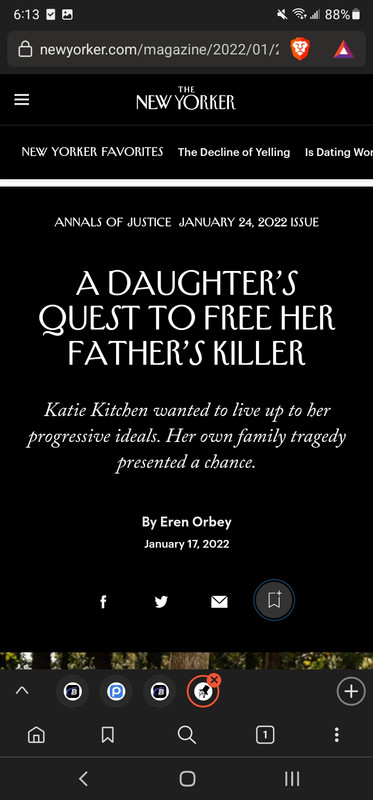
https://www.newyorker.com/magazine/2...fathers-killer
Behind a paywall
Katie Kitchen had always felt some sadness about the fate of the man convicted of murdering her father. On a summer night in 1991, Robert Hans Kaim, a seventy-seven-year-old white real-estate developer, had just pulled into his garage in Houston’s upscale Tanglewood neighborhood when an assailant robbed him at gunpoint, shot him in the chest, and then drove off with his wallet. Nine days later, police arrested a twenty-year-old Black man named Joseff Deon White in connection with the crime. White told investigators that he’d had an accomplice, a Jamaican friend who went by the street name Blocker, but the police never found or even identified him. At White’s trial, Kitchen noticed his small stature, and the mothers of his children sitting on his side of the courtroom, crying. The jury reached a guilty verdict in forty-five minutes. On April 20, 1992, White was sentenced to life in prison. “All I could think about was how senseless it was for a person to throw away their life for a wallet,” Kitchen, who was forty at the time, wrote later, in her journal.
The Tanglewood home, where Kitchen grew up, is a mid-century-modern structure made of brick and glass. I met Kitchen there, in August, when she was visiting one of her two older sisters, Ellen Benninghoven, who moved back into the home a few years after their mother’s death, in 2011. As Kitchen unlatched a tall security gate, which the family had installed in the wake of the murder, she gestured toward the front entrance. “That’s where the police found him,” she said. When officers reached the scene, after a neighbor heard a commotion and called 911, Kaim was still alive. According to the Houston Chronicle, he had crawled to the entryway and was banging his head against the door in an attempt to wake his wife.An émigré from Berlin who’d fought for the U.S. in the Second World War, Kaim had an imposing build and a “huge German voice,” Kitchen said. Before he was rushed to the hospital, he told the police that during the robbery he’d refused to hand over his wallet. Kitchen, who was out of town that night and didn’t reach the house until the next morning, sometimes imagines that her father “scared the hell” out of White, perhaps leaving him no choice but to fire in self-defense.
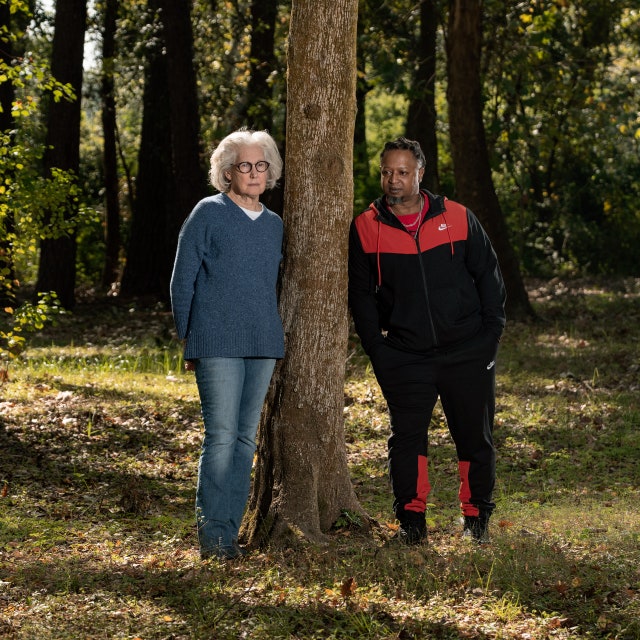
Now seventy, Kitchen is white-haired and voluble, with a slight Texas accent and an understated personal style.Versed in the anti-racist precepts of such writers as Ibram X. Kendi, she calls herself a “white woman of privilege” from a “very segregated world.” During her childhood, a Black housekeeper, Willie Lee, cooked the family’s meals and lived in servants’ quarters Monday through Friday. Kitchen’s first husband, whom she married when she was nineteen and divorced shortly before her father was killed, was the heir to an oil fortune. Today, Kitchen splits her time between homes in Austin, New York City, and Snowmass, Colorado. With the exception of a stint as a waitress at a Holiday Inn, she has never had a paying job.
As we sat in the back yard of her sister’s house, which is still decorated with their parents’ antique furniture and numbered-edition fine-art prints, Kitchen became emotional discussing her father’s death. She recalled his fondness for sailing trips and jelly doughnuts. But at other times she spoke of his murder with an unnerving sense of perspective, as if her personal tragedy were an inevitable result of a broader societal reckoning. “I’m just so privileged that I can’t imagine complaining about anything,” she said. “We all lose our dads, right? Mine was to a violent crime, but, then again, it just shows that I am part of this world. If rich old white people keep putting themselves on taller and taller pedestals, sooner or later people are going to break down the walls.”
After Kaim died, Kitchen said, she finally “started showing up for life.” She travelled the globe, got a bachelor’s degree, and, at at a hatha-yoga class in Houston, met a financial executive named Paul Kovach, who became her second husband. Kitchen was a liberal, but, as she wrote in her journal, she worried that “there was nothing I could really do to make a difference.” In August of 2014, she attended a two-day symposium, “Making the Change They Want to See,” at an arts center near Snowmass. One of the speakers, the artist and policy advocate Laurie Jo Reynolds, described organizing a successful campaign to shut down the Tamms Correctional Center, a notorious supermax prison in Illinois. “We are all bystanders to torture, but we don’t have to be,” Reynolds told the mostly white and wealthy crowd. Another speaker, Darrell Cannon, had spent twenty-four years in prison, including nearly a decade at Tamms, for a murder that he did not commit. Kitchen asked to sit beside him at a dinner after the event; she wrote in her journal that it was one of the first times she’d shared a meal with a Black man. Listening to Cannon discuss his incarceration, Kitchen felt a “deep-seated shame,” and she began to think of Joseff White. “What if he had become a good person?” she wrote. “Shouldn’t he have the right to be free after serving some 20+ years?”
That fall, Kitchen and Kovach enrolled in a pair of personal-development seminars offered by the company Landmark Worldwide. A corporate reincarnation of Werner Erhard’s controversial self-improvement trainings, which were in vogue in the seventies, Landmark is popular today among H.R. departments and M.B.A. types. Kitchen’s course leader, Josselyne Herman-Saccio, told me that Landmark helps people “clear out everything in their past” and then create “something to fill that empty space.” Kitchen signed up on the advice of her stepson, an administrator at an élite private school in Manhattan, who told me he’d hoped that Landmark might help her sort out “her stuff around wealth and privilege and her father’s murder.” During the last session of the second seminar, Kitchen and some of her peers presented their work to an audience of loved ones. Kitchen invited her sisters, explaining that she’d had a “transformation.” When it was her turn to approach the microphone, she felt her heart racing. “That’s where I told them my story, and then my plan,” Kitchen recalled. “I was going to do everything in my power to get the man who killed my father out of prison.”
In Texas, state law requires parole panels ruling on a murderer’s release to solicit feedback from the victim’s family members. When White first came up for parole, in 2006, after fifteen years in prison, Kitchen’s relatives began receiving notices from Texas’s Department of Criminal Justice. (Kitchen herself had opted out of the department’s mailings.) Bruce Roberson, a family friend, wrote back on behalf of Kitchen’s mother, Elsa, to request that White remain in prison. Roberson told me, “Elsa was fervent about not letting him out while she was alive, because she feared for her life.” But by the time Kitchen had completed her Landmark course Elsa had died, and no one in the family formally opposed White’s release or Kitchen’s plans to free him.
In October of 2014, Kitchen called Mark Vinson, the prosecutor on her father’s case and one of only a few Black lawyers in the Harris County district attorney’s office at the time. During the trial, Vinson had described White as “a man who’d do anything to get paid.” Kitchen said that when she reached Vinson, who had retired, and has since died, he told her, “For the life of me, I don’t know why you would want to free that kind of a no-good man.” Kitchen then phoned the Texas Department of Criminal Justice and learned that White was incarcerated at the Darrington Unit, a penitentiary thirty....
She learned that while in prison White had converted to Islam, taking the name Yusuff, and had earned his G.E.D. With Kitchen’s permission, Tauss planned to recommend to the parole board that White be transferred to the Carol Vance Unit, a highly selective prison in Fort Bend County, Texas, with an eighteen-month rehabilitative program. If he completed the program, he would be freed.
Kitchen met White on May 20, 2015, in a windowless conference room at Carol Vance, a few days after his transfer. As they approached each other, Kitchen’s “whole being was filled with compassion,” she later wrote. “I reached out my hand and said ‘Hi, I’m Katie Kitchen.’ ” They talked for four and a half hours. White described life in prison before his transfer, when touching other inmates was forbidden and guards routinely checked his rectum for drugs.He spoke of his four children—he later discovered that he’d fathered a fifth—one of whom had a child of his own. Kitchen said she hoped that they could one day visit schools together to share their story. White told me, “I expected for the white lady to be angry, to go off on me, but it was nothing like that. It was all love.” At the end of the meeting, he asked the mediator’s permission to give Kitchen a hug.
He's now free.The Tanglewood home, where Kitchen grew up, is a mid-century-modern structure made of brick and glass. I met Kitchen there, in August, when she was visiting one of her two older sisters, Ellen Benninghoven, who moved back into the home a few years after their mother’s death, in 2011. As Kitchen unlatched a tall security gate, which the family had installed in the wake of the murder, she gestured toward the front entrance. “That’s where the police found him,” she said. When officers reached the scene, after a neighbor heard a commotion and called 911, Kaim was still alive. According to the Houston Chronicle, he had crawled to the entryway and was banging his head against the door in an attempt to wake his wife.An émigré from Berlin who’d fought for the U.S. in the Second World War, Kaim had an imposing build and a “huge German voice,” Kitchen said. Before he was rushed to the hospital, he told the police that during the robbery he’d refused to hand over his wallet. Kitchen, who was out of town that night and didn’t reach the house until the next morning, sometimes imagines that her father “scared the hell” out of White, perhaps leaving him no choice but to fire in self-defense.
Now seventy, Kitchen is white-haired and voluble, with a slight Texas accent and an understated personal style.Versed in the anti-racist precepts of such writers as Ibram X. Kendi, she calls herself a “white woman of privilege” from a “very segregated world.” During her childhood, a Black housekeeper, Willie Lee, cooked the family’s meals and lived in servants’ quarters Monday through Friday. Kitchen’s first husband, whom she married when she was nineteen and divorced shortly before her father was killed, was the heir to an oil fortune. Today, Kitchen splits her time between homes in Austin, New York City, and Snowmass, Colorado. With the exception of a stint as a waitress at a Holiday Inn, she has never had a paying job.
As we sat in the back yard of her sister’s house, which is still decorated with their parents’ antique furniture and numbered-edition fine-art prints, Kitchen became emotional discussing her father’s death. She recalled his fondness for sailing trips and jelly doughnuts. But at other times she spoke of his murder with an unnerving sense of perspective, as if her personal tragedy were an inevitable result of a broader societal reckoning. “I’m just so privileged that I can’t imagine complaining about anything,” she said. “We all lose our dads, right? Mine was to a violent crime, but, then again, it just shows that I am part of this world. If rich old white people keep putting themselves on taller and taller pedestals, sooner or later people are going to break down the walls.”
After Kaim died, Kitchen said, she finally “started showing up for life.” She travelled the globe, got a bachelor’s degree, and, at at a hatha-yoga class in Houston, met a financial executive named Paul Kovach, who became her second husband. Kitchen was a liberal, but, as she wrote in her journal, she worried that “there was nothing I could really do to make a difference.” In August of 2014, she attended a two-day symposium, “Making the Change They Want to See,” at an arts center near Snowmass. One of the speakers, the artist and policy advocate Laurie Jo Reynolds, described organizing a successful campaign to shut down the Tamms Correctional Center, a notorious supermax prison in Illinois. “We are all bystanders to torture, but we don’t have to be,” Reynolds told the mostly white and wealthy crowd. Another speaker, Darrell Cannon, had spent twenty-four years in prison, including nearly a decade at Tamms, for a murder that he did not commit. Kitchen asked to sit beside him at a dinner after the event; she wrote in her journal that it was one of the first times she’d shared a meal with a Black man. Listening to Cannon discuss his incarceration, Kitchen felt a “deep-seated shame,” and she began to think of Joseff White. “What if he had become a good person?” she wrote. “Shouldn’t he have the right to be free after serving some 20+ years?”
That fall, Kitchen and Kovach enrolled in a pair of personal-development seminars offered by the company Landmark Worldwide. A corporate reincarnation of Werner Erhard’s controversial self-improvement trainings, which were in vogue in the seventies, Landmark is popular today among H.R. departments and M.B.A. types. Kitchen’s course leader, Josselyne Herman-Saccio, told me that Landmark helps people “clear out everything in their past” and then create “something to fill that empty space.” Kitchen signed up on the advice of her stepson, an administrator at an élite private school in Manhattan, who told me he’d hoped that Landmark might help her sort out “her stuff around wealth and privilege and her father’s murder.” During the last session of the second seminar, Kitchen and some of her peers presented their work to an audience of loved ones. Kitchen invited her sisters, explaining that she’d had a “transformation.” When it was her turn to approach the microphone, she felt her heart racing. “That’s where I told them my story, and then my plan,” Kitchen recalled. “I was going to do everything in my power to get the man who killed my father out of prison.”
In Texas, state law requires parole panels ruling on a murderer’s release to solicit feedback from the victim’s family members. When White first came up for parole, in 2006, after fifteen years in prison, Kitchen’s relatives began receiving notices from Texas’s Department of Criminal Justice. (Kitchen herself had opted out of the department’s mailings.) Bruce Roberson, a family friend, wrote back on behalf of Kitchen’s mother, Elsa, to request that White remain in prison. Roberson told me, “Elsa was fervent about not letting him out while she was alive, because she feared for her life.” But by the time Kitchen had completed her Landmark course Elsa had died, and no one in the family formally opposed White’s release or Kitchen’s plans to free him.
In October of 2014, Kitchen called Mark Vinson, the prosecutor on her father’s case and one of only a few Black lawyers in the Harris County district attorney’s office at the time. During the trial, Vinson had described White as “a man who’d do anything to get paid.” Kitchen said that when she reached Vinson, who had retired, and has since died, he told her, “For the life of me, I don’t know why you would want to free that kind of a no-good man.” Kitchen then phoned the Texas Department of Criminal Justice and learned that White was incarcerated at the Darrington Unit, a penitentiary thirty....
She learned that while in prison White had converted to Islam, taking the name Yusuff, and had earned his G.E.D. With Kitchen’s permission, Tauss planned to recommend to the parole board that White be transferred to the Carol Vance Unit, a highly selective prison in Fort Bend County, Texas, with an eighteen-month rehabilitative program. If he completed the program, he would be freed.
Kitchen met White on May 20, 2015, in a windowless conference room at Carol Vance, a few days after his transfer. As they approached each other, Kitchen’s “whole being was filled with compassion,” she later wrote. “I reached out my hand and said ‘Hi, I’m Katie Kitchen.’ ” They talked for four and a half hours. White described life in prison before his transfer, when touching other inmates was forbidden and guards routinely checked his rectum for drugs.He spoke of his four children—he later discovered that he’d fathered a fifth—one of whom had a child of his own. Kitchen said she hoped that they could one day visit schools together to share their story. White told me, “I expected for the white lady to be angry, to go off on me, but it was nothing like that. It was all love.” At the end of the meeting, he asked the mediator’s permission to give Kitchen a hug.
Sloots gona sloot.
01-20-2022, 07:40 AM
-
#2
01-20-2022, 07:42 AM
-
#3

JFL lol @ the subtitle especially. Essentially - "Dumb misguided sloot eager to virtue signal, gets chance when meeting father's murderer". "Societal reckoning" "My dad was murdered, but I'm so privileged"
Originally Posted By brappbrah⏩
What, because he's out of jail? The degenerate is probably going to proceed have even more children that he can't afford, that will likely be living off welfare and be future criminals (that will likely breed more welfare moochers and future criminals).who cares... less burden on the taxpayer.
01-20-2022, 07:42 AM
-
#4
 01-20-2022, 07:44 AM
-
#5
 01-20-2022, 07:46 AM
-
#6
- MonsieurWhite
- The Most Racist Man Alive
-

- MonsieurWhite
- The Most Racist Man Alive
- Join Date: Aug 2020
- Posts: 3,629
- Rep Power: 37104
-
-
Boy, she sure does look as (((white))) as can be
Dear Federal Agents- All my posts are serious and I am a threat to society.
01-20-2022, 07:47 AM
-
#7
 01-20-2022, 07:48 AM
-
#8
01-20-2022, 07:51 AM
-
#9
- EagleOfWar
- Registered User
-

- EagleOfWar
- Registered User
- Join Date: Feb 2011
- Posts: 15,643
- Rep Power: 107090
-
-
Gonna laugh when she’s gets robbed for everything she has.
Also lol at all the criminals who convert to Islam in the pen and change their names. This is what Islam attracts. Almost any black criminal that’s “religious” is going to be Islamic.
Also lol at all the criminals who convert to Islam in the pen and change their names. This is what Islam attracts. Almost any black criminal that’s “religious” is going to be Islamic.
This body holding me, be my reminder here that I am not alone.
Makes me feel eternal, all this Pain is an Illusion.
01-20-2022, 07:53 AM
-
#10
- maori-rap
- Dos hand signal
-

- maori-rap
- Dos hand signal
- Join Date: Sep 2004
- Location: United Kingdom (Great Britain)
- Age: 43
- Posts: 27,400
- Subscribers: 2
- Rep Power: 157903
-
-
Odd how so many of these US robberies which end in the victim getting killed, follow a certain pattern.
There is no need to kill the person unless they actively resist and fight back, and that hardly ever seems to be the case. It is so cold-blooded to take someones life over a few $$ or a material object like a car.
There is no need to kill the person unless they actively resist and fight back, and that hardly ever seems to be the case. It is so cold-blooded to take someones life over a few $$ or a material object like a car.
Cook the man some eggs!
01-20-2022, 07:55 AM
-
#11
- PTzFree
- Sarcastic Sage
-

- PTzFree
- Sarcastic Sage
- Join Date: Mar 2010
- Location: United States
- Posts: 7,402
- Rep Power: 69078
-
-
your first instinct might be to grieve for the father, but if this is how mentally ill his daughter turned out he was 100% a beta cuck loser.
AP7 Crew
Rogue Home Gym Crew
Officecel Crew
Motorcycle Crew
“When you want to succeed as bad as you want to breathe, then you'll be successful.”
― Eric Thomas, The Secret to Success
01-20-2022, 07:57 AM
-
#12
 01-20-2022, 07:59 AM
-
#13
 01-20-2022, 08:01 AM
-
#14
- DesiredUserphag
- 1:12TilTheDayIFukinDie
-

- DesiredUserphag
- 1:12TilTheDayIFukinDie
- Join Date: Sep 2014
- Posts: 40,176
- Rep Power: 397140
-
-
Too goddamn emotional for their own good. Exactly why society is going down the tubes.
𝗣𝗨𝗥𝗘𝗕𝗟𝗢𝗢𝗗
ωσяℓ∂ тяανєℓєя ȼяєω ₅₀/₁₉₅
𝕬𝖊𝖘𝖙𝖍𝖊𝖙𝖎𝖈𝖆𝖑𝖑𝖞 𝕮𝖚𝖙 𝕸𝖆𝖘𝖙𝖊𝖗 𝕽𝖆𝖈𝖊 ®
ᗪIᔕᑕᖇIᗰIᑎᗩTIOᑎ E᙭ᑕᒪᑌᔕIOᑎ IᑎᗪOᑕTᖇIᑎᗩTIOᑎ
01-20-2022, 08:04 AM
-
#15
 01-20-2022, 08:14 AM
-
#16
- brappbrah
- Registered User
-

- brappbrah
- Registered User
- Join Date: Oct 2020
- Location: London, ON
- Age: 56
- Height: 5'9"
- Weight: 160 lbs
- Posts: 4,244
- Rep Power: 18695
-
-
Originally Posted By Polaris⏩
that's haram thoJWhat, because he's out of jail? The degenerate is probably going to proceed have even more children that he can't afford, that will likely be living off welfare and be future criminals (that will likely breed more welfare moochers and future criminals).
Originally Posted By AlfBundy⏩
who cares. not my dad.This is a ****git's argument. Negged
Courtney Ryan is my oneitis
01-20-2022, 08:16 AM
-
#17
- bfdehewdbyywhn
- Registered User
-

- bfdehewdbyywhn
- Registered User
- Join Date: Oct 2019
- Age: 56
- Posts: 47,380
- Rep Power: 103861
-
-
Daughters not even once
HTC is too skinny for me. Fat Girls only crew. serious
Chubby Chaser and Fat Girls Only crew Founder
01-20-2022, 08:51 AM
-
#18
- PenguinWarrior
- Registered User
-
- PenguinWarrior
- Registered User
- Join Date: Nov 2013
- Age: 36
- Posts: 1,855
- Rep Power: 9256
-
-
Originally Posted By volleys⏩
It's from a magazine called the New Yorker. It's a far left rag that is very popular with progressives.Interesting news article.
Jessie what’s Wikipedia say about this woman’s early life?
Jessie what’s Wikipedia say about this woman’s early life?
It's big on advocating for abolishing prisons, antiracism etc
01-20-2022, 09:09 AM
-
#19
 01-20-2022, 09:09 AM
-
#20
- SaltyDog920
- Certified jawstethics
-

- SaltyDog920
- Certified jawstethics
- Join Date: Feb 2014
- Posts: 14,311
- Subscribers: 1
- Rep Power: 161966
-
-
Liberalism is 100% a mental disorder. What a ****ing nutcase.
01-20-2022, 09:15 AM
-
#21
- mulletwarrior
- Registered User
-

- mulletwarrior
- Registered User
- Join Date: Nov 2013
- Age: 41
- Posts: 13,586
- Rep Power: 99233
-
-
Damn women will do anything for a chance to get the beebee sea.
mo e
01-20-2022, 09:20 AM
-
#22

The wrong person was "robbed" that day
*LTC*
*Come Clarity crew*
*10 Kittens shirt crew*
"You know what, I'm not fat. I'm off-season. That's what you gotta be educated you people - science! You don't know science. I know science. I'm educated that I am off-season.
Some, about 70-80% bodybuilders like to get fat off-season so they can powerlift. I'm a powerlifter off-season. In contest I get ready for a bodybuilding show. I'm a /Bodybuilder Powerlifter."
- Jason "The Claw" Genova
01-20-2022, 09:21 AM
-
#23

Originally Posted By SaltyDog920⏩
Women do not think coherently. They just jump into whatever crosses their mind.Liberalism is 100% a mental disorder. What a ****ing nutcase.
This guy became stronger because he stood over her dead father. She wants his strength and does not think any deeper.
01-20-2022, 09:22 AM
-
#24
- MiniManletBrah
- Registered User
-

- MiniManletBrah
- Registered User
- Join Date: Jan 2016
- Age: 35
- Posts: 10,856
- Rep Power: 1200
-
-
Originally Posted By inkie77⏩
This is always the answer when it comes to white womenshe wants him out to suck on his ethnic schlong
01-20-2022, 09:22 AM
-
#25
 01-20-2022, 09:32 AM
-
#26
- knightofday
- Registered User
-

- knightofday
- Registered User
- Join Date: Oct 2013
- Location: California, United States
- Age: 39
- Posts: 14,588
- Rep Power: 126002
-
-
Originally Posted By volleys⏩
First thing in my mind too. Just the usual suspectsInteresting news article.
Jessie what’s Wikipedia say about this woman’s early life?
Jessie what’s Wikipedia say about this woman’s early life?
Bookmarks
-

- Digg
-

- del.icio.us
-

- StumbleUpon
-

-

Posting Permissions
- You may not post new threads
- You may not post replies
- You may not post attachments
- You may not edit your posts